UNESCO World Heritage Site since 1985.
The Medina of Marrakech is a vibrant urban center that preserves centuries of Islamic urban planning, architectural innovation, and cultural exchange. Founded by the Almoravids in the late 11th century, it grew into a major imperial and religious city under the Almohads, who introduced monumental constructions and expanded its fortified walls.
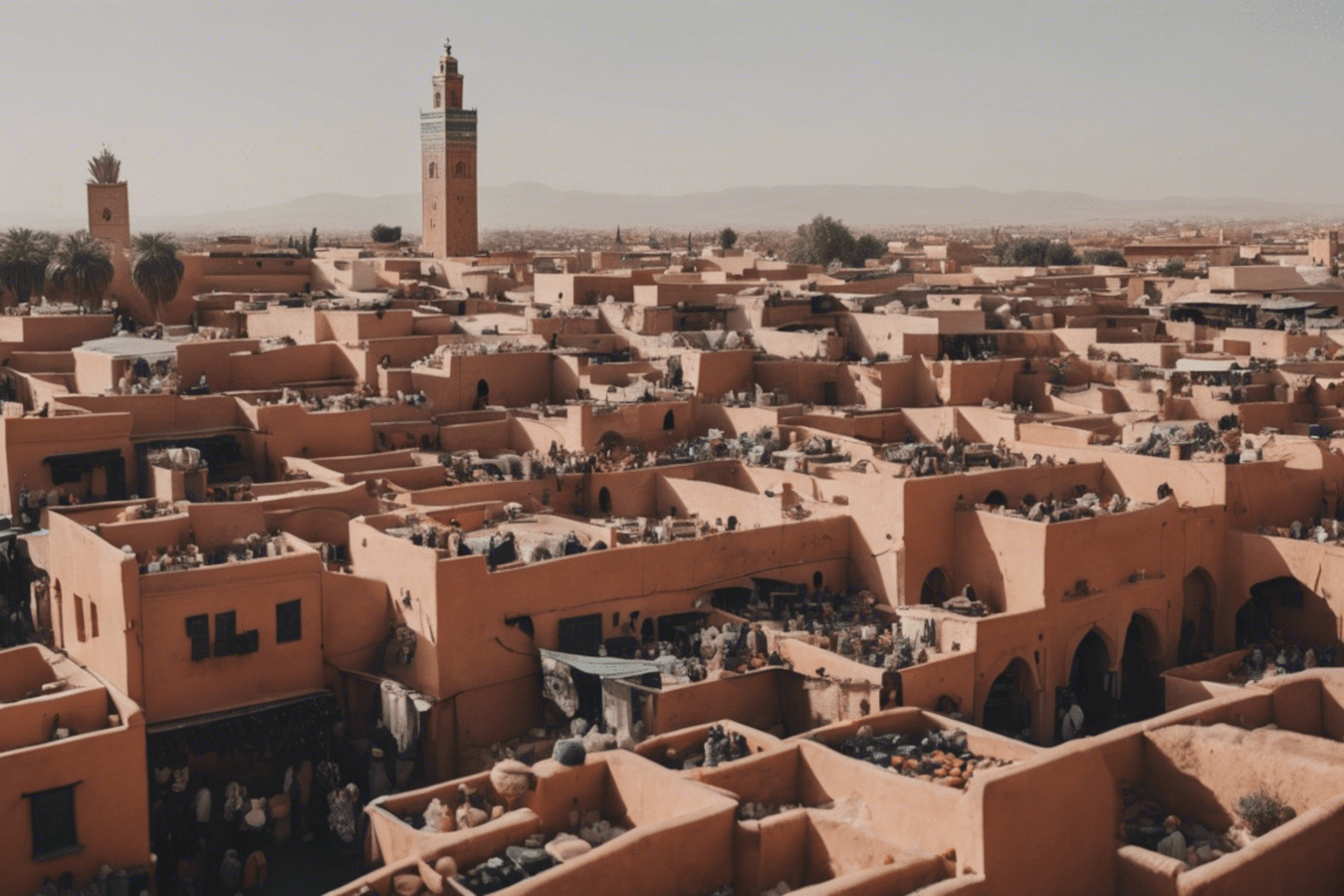
The medina is defined by its red-ochre architecture, narrow alleys, and a labyrinthine street layout anchored by key architectural landmarks. The Koutoubia Mosque, with its 77-meter-high minaret, exemplifies Almohad elegance and remains an enduring city symbol. Palaces such as El Badi and Bahia reflect opulent courtly architecture, while the Ben Youssef Madrasa showcases refined Marinid craftsmanship through its zellij mosaics, cedar wood carvings, and stucco decoration.
The heart of the medina is Jemaa el-Fna Square, historically a space for public executions and today a UNESCO-recognized cultural site. The square pulses with life—storytellers, musicians, herbalists, and food vendors transform it into a dynamic arena of performance and exchange. Surrounding souks specialize in pottery, leather, textiles, and jewelry, maintaining traditional artisan practices.
Marrakech’s medina remains a living city, continuously inhabited and adapted to modern life. While tourism has introduced new challenges, including over-commercialization and gentrification, heritage authorities and local stakeholders actively promote conservation through sensitive restoration and sustainable tourism practices. These efforts help retain the medina’s authenticity and reinforce its role as a social and economic nucleus.
Source: UNESCO World Heritage Centre, African World Heritage Sites.