
UNESCO World Heritage Site since 1980.
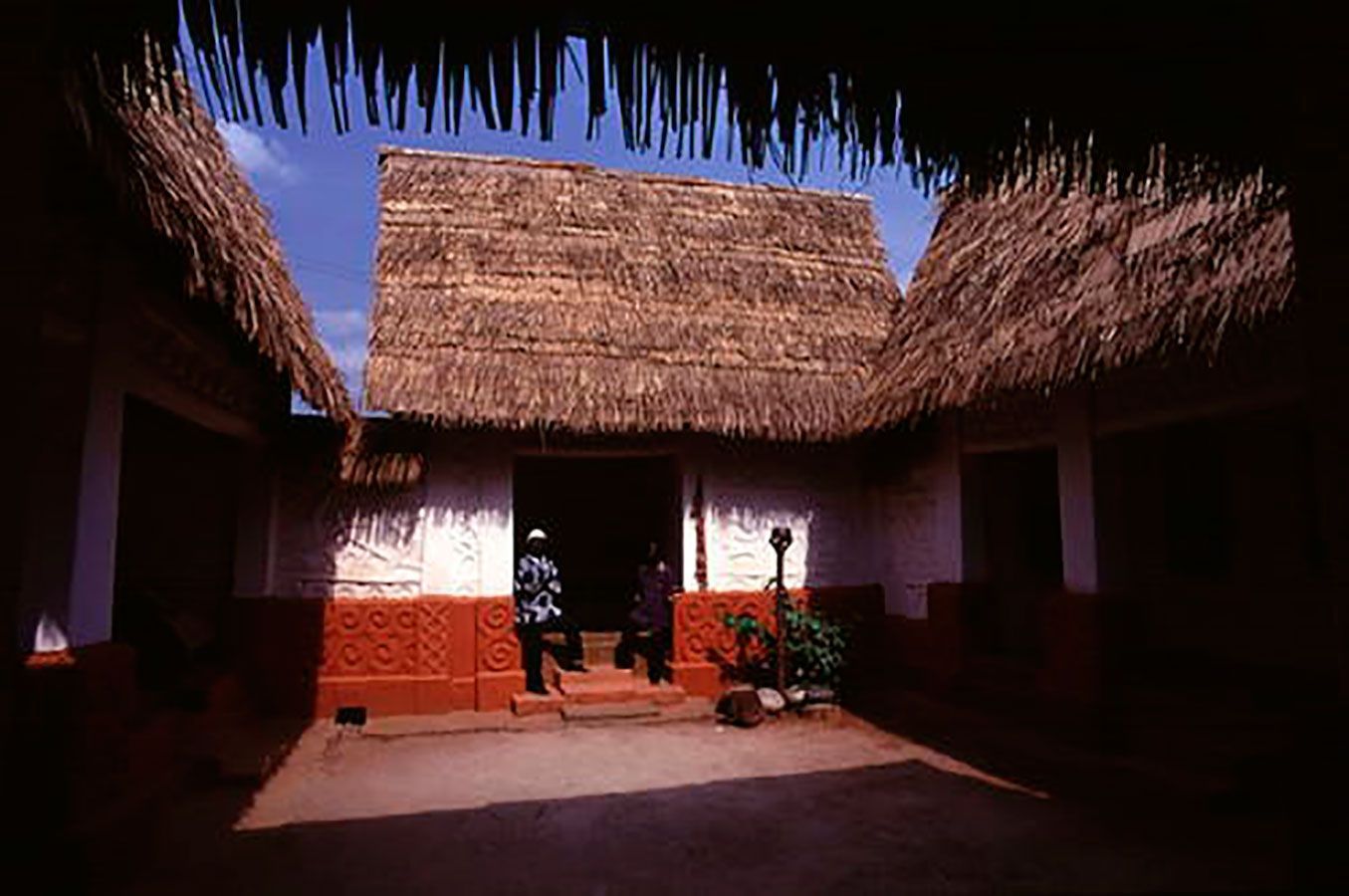
A surviving testament to the 18th–19th century Asante Empire, the Asante Traditional Buildings are a collection of 10 sacred shrine-houses, each dedicated to a minor deity (abosom). These unique wattle-and-daub structures, arranged around courtyards and richly adorned with Adinkra-symbol bas-reliefs, were inscribed as a UNESCO World Heritage Site in 1980 under criterion (v) for being “rare surviving examples of a significant traditional architectural style”.
These shrine-houses present a powerful architectural representation of Asante spirituality and communal identity. Their four-room, courtyard-centred layout (‘fihankra’) allowed functional integration—three open rooms for cooking, drumming, meeting, and one sacred inner sanctuary. The unique bas-reliefs—spirals, arabesques, birds, and plants—reflect Adinkra symbols, communicating Asante proverbs and spiritual meanings through durable earthen décor.
These buildings stood at the heart of Asante religious life, providing sacred spaces managed by priests—places where community members sought divine counsel. The survival of these earthen shrines—especially Ejisu-Besease, now open to visitors—testifies to reverence, custodianship, and resilience in the face of colonial destruction and decay.
Despite the fragile nature of mud construction, efforts by Ghana’s heritage agencies, WMF, Craterre, and UNESCO have aimed at raising awareness and preserving these living monuments of indigenous craftsmanship and belief. However, nine remain in varying conditions, underlining the urgent need for traditional reconstruction knowledge and sustainable conservation strategies.
Today, these Asante shrines embody a powerful blend of architecture, religion, and symbol, offering profound insight into precolonial West African statecraft, art, and spiritual architecture.
.
Sources: UNESCO World Heritage Centre, Wikipedia, World Monuments Fund, Ghana Museums & Monuments Board.