UNESCO World Heritage Site since 1981.
The Ruins of Kilwa Kisiwani and Songo Mnara are among the most important surviving monuments of the medieval Swahili coast, reflecting a sophisticated maritime culture that thrived on trade across the Indian Ocean. The site represents an exceptional testimony to urban development and cultural exchange in East Africa from the 9th to the 16th centuries.
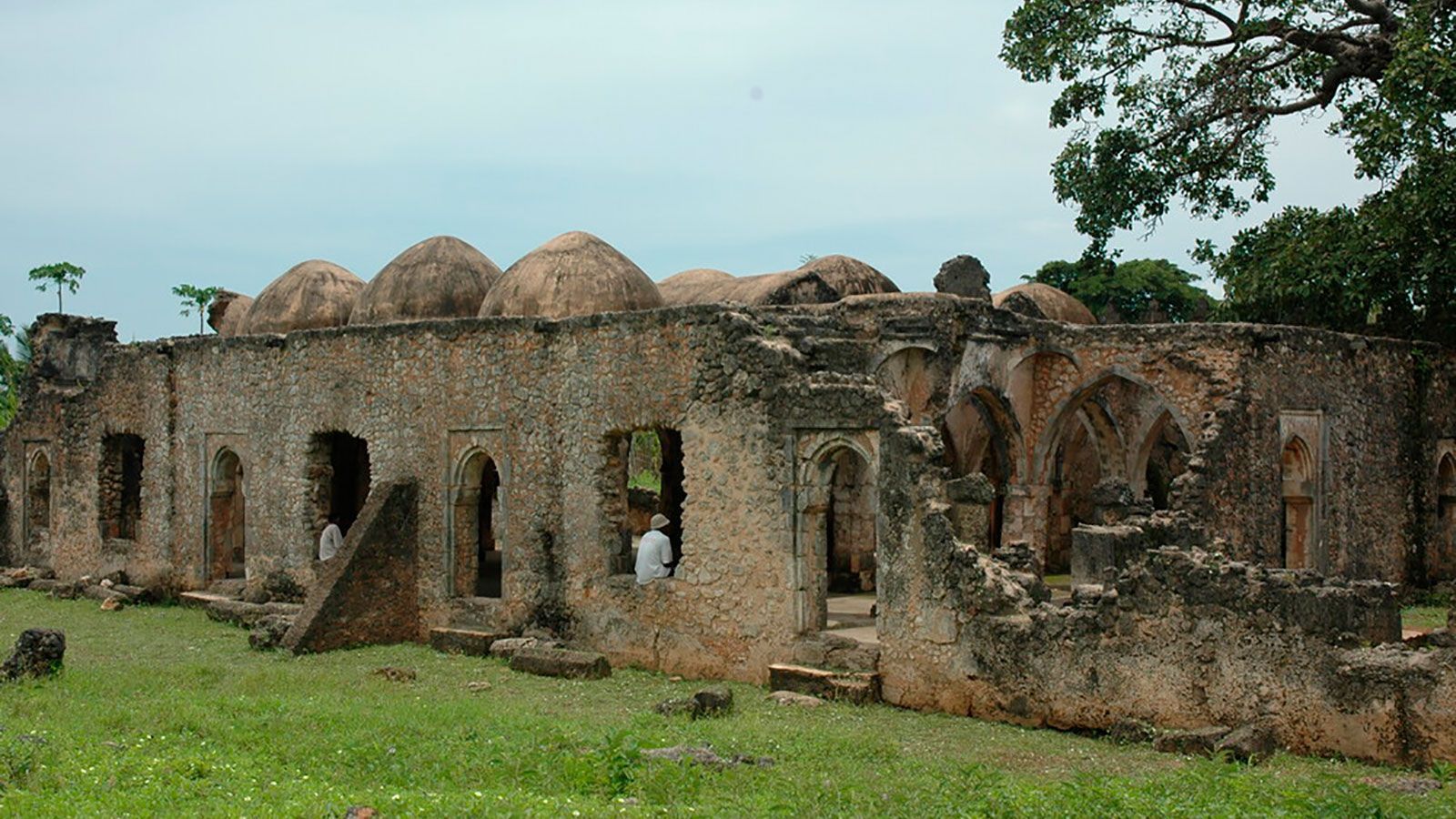
Kilwa Kisiwani, the larger and older of the two, was a powerful city-state whose prosperity derived from its control of trade in gold, ivory, spices, and ceramics. It was once considered one of the most beautiful cities of its time. The Great Mosque of Kilwa, built of coral stone, is among the oldest mosques on the coast and features a unique domed hypostyle hall. Nearby, the Husuni Kubwa palace—dating to the 14th century—is a sprawling complex with vaulted ceilings, staircases, storage rooms, and a bathing court, showcasing local interpretations of Islamic architectural forms.
Songo Mnara, located a few kilometers south, flourished during the 14th and 15th centuries. The urban plan includes six mosques, communal courtyards, cemeteries, and over 30 domestic structures built from finely carved coral blocks. The site illustrates an advanced model of city organization with spatial planning that reflects social hierarchies and religious life.
Together, these ruins provide invaluable evidence of Swahili culture, maritime connectivity, and the architectural achievements of East African Islamic societies. The coral-stone construction, spatial logic, and blend of African and Islamic traditions are key attributes of their Outstanding Universal Value.
Both sites were once endangered due to natural erosion, vegetation encroachment, and neglect, but since 2014 they have benefited from intensified conservation efforts involving structural consolidation, vegetation management, and archaeological documentation. These efforts continue to preserve the cultural landscape while allowing for responsible tourism and community engagement.
.
Sources: UNESCO World Heritage Centre, Wikipedia, AfricanWorldHeritageSites, World Monuments Fund.