
UNESCO World Heritage Site since 2003.
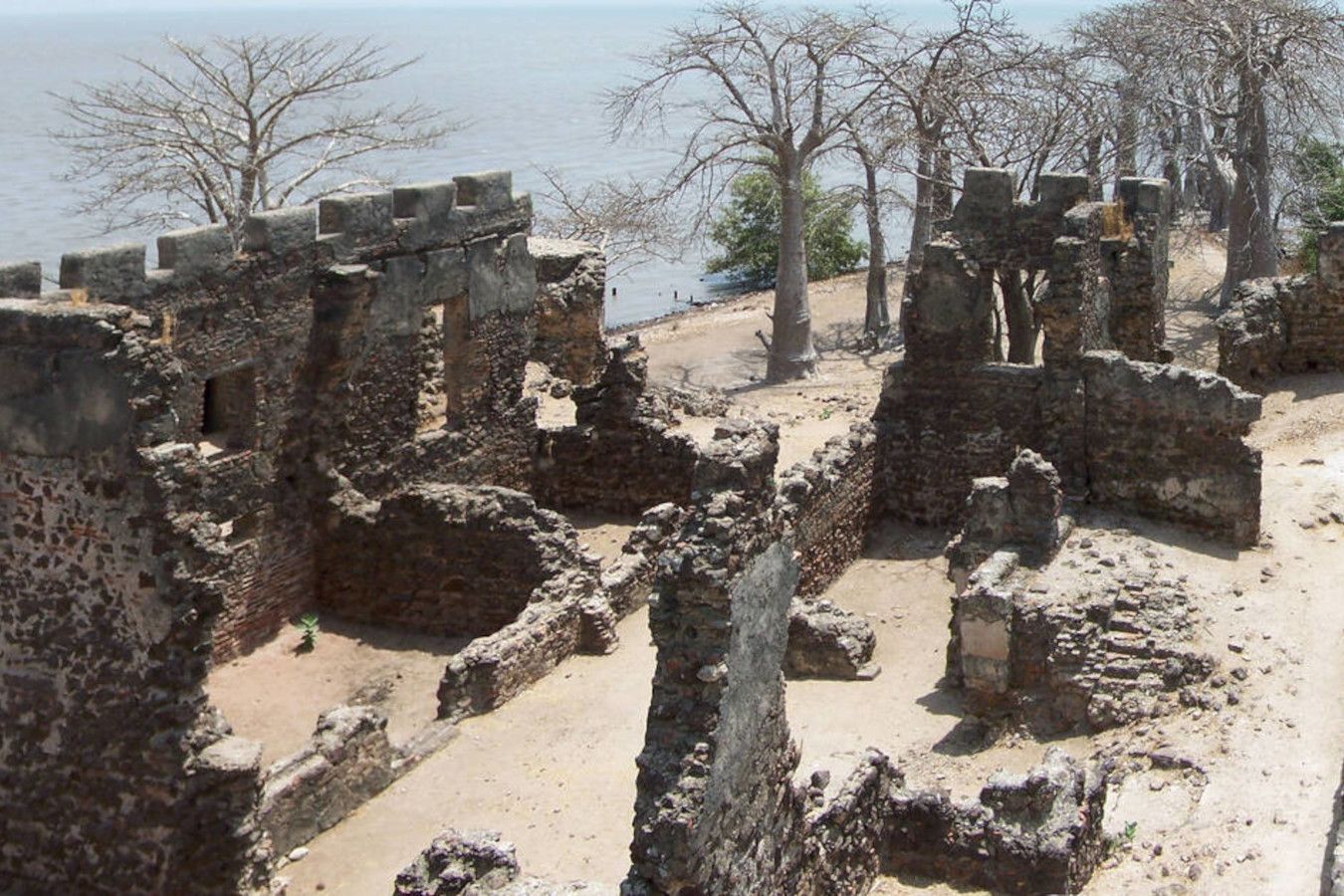
Kunta Kinteh Island, once known as James Island, is a deeply symbolic site at the heart of the transatlantic slave trade. Established as a Portuguese outpost in the 15th century, the island later changed hands between the Duchy of Courland, the Dutch West India Company, the British Royal African Company, and the French. Its fortifications served both to control navigation on the Gambia River and as a center for enslaving and exporting Africans.
In the 17th and 18th centuries, the island’s fort became a primary holding station where enslaved individuals were detained before forced embarkation to the Americas. Its name was changed to Kunta Kinteh Island in 2011, honoring the memory of resistance and the character from Alex Haley’s Roots, whose narrative traces back to nearby Juffureh.
The World Heritage designation includes six related sites: Fort Bullen and the Six-Gun Battery, constructed to enforce abolition; and colonial-era buildings in Albreda and Juffureh, including warehouses, a chapel, and trade offices. Collectively, these locations reflect both the mechanisms of slavery and efforts toward its suppression.
Constructed with laterite and bricks, the remaining fort walls are severely eroded by the river and weather. Baobab trees now grow amid the ruins, symbolizing endurance. Conservation initiatives led by The Gambia’s National Centre for Arts and Culture have stabilized key elements since the 1990s, focusing on shoreline reinforcement and documentation.
Today, Kunta Kinteh Island is a powerful site of remembrance. Nearby, a museum in Juffureh and community-led tours provide historical interpretation. Annual Roots festivals strengthen ties between the diaspora and local heritage, sustaining the island’s legacy as a place of memory, resistance, and reflection.
Source: UNESCO World Heritage Centre, African World Heritage Sites, Atlas Obscura, National Centre for Arts and Culture, Britannica.