UNESCO World Heritage Site since 1980.
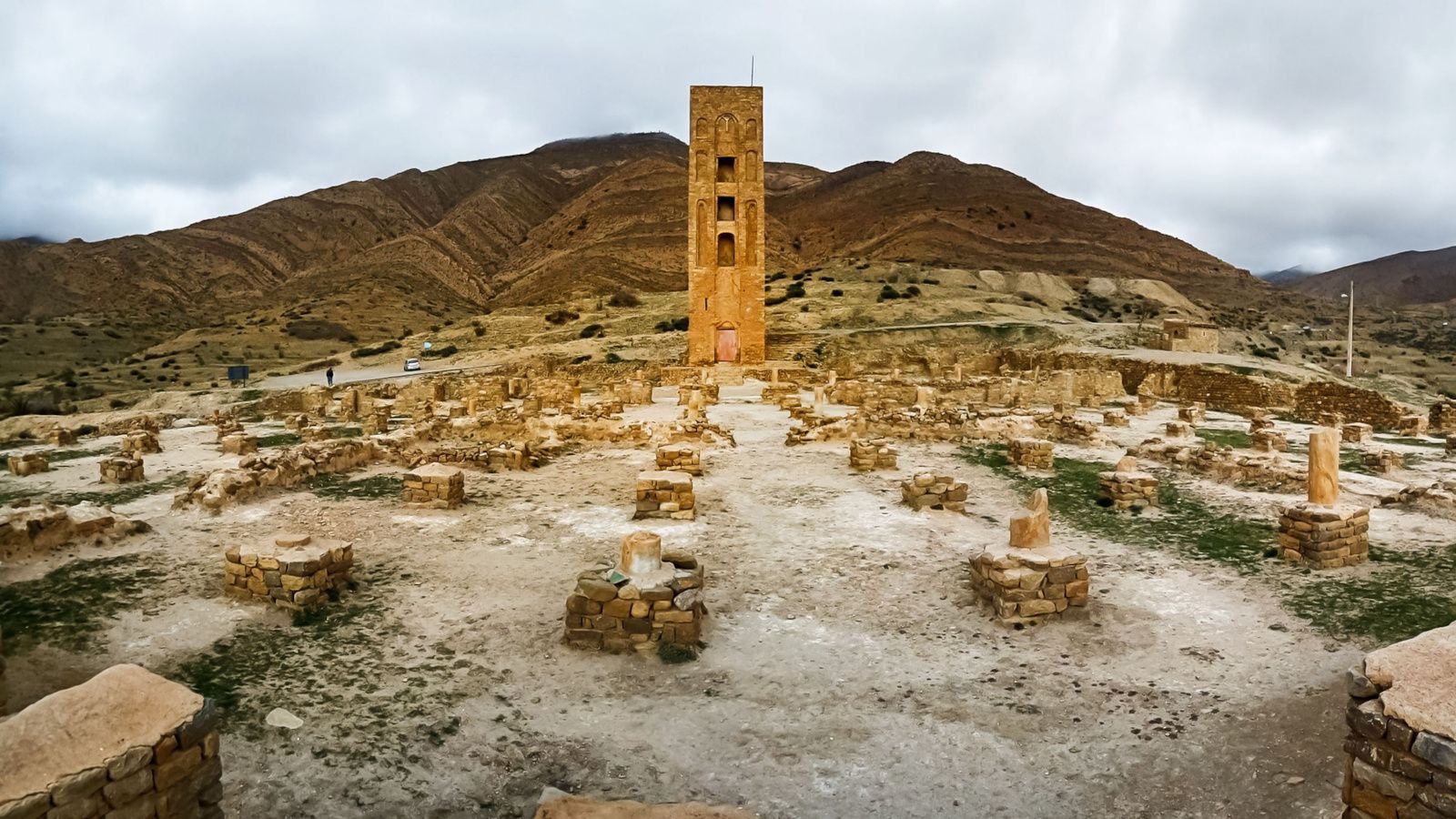
Al Qal’a of Beni Hammad, also known as the Qalʿat Banī Ḥammād, was the first capital of the Hammadid dynasty, founded in 1007 by Hammad ibn Buluggin. Located 1,000 meters above sea level in the Hodna Mountains, the site served as a fortified city and political center until its abandonment in 1090.
The remains of the city are a remarkable example of early Islamic urban planning and military architecture in North Africa. Enclosed by a 7 km-long wall, the complex includes palaces, mosques, pavilions, and residential structures built mainly of stone and baked brick. The Grand Mosque, one of the largest in Algeria, features a 20-meter-high minaret inspired by the Great Mosque of Kairouan, revealing deep cultural and architectural ties across the Islamic world.
The palatial architecture displays a refined aesthetic with courtyards, ornamental pools, and sophisticated hydraulic systems, suggesting both opulence and technical skill. Although the city was destroyed during regional conflicts, archaeological excavations since the early 20th century have uncovered valuable insights into its layout and life.
Designated a UNESCO World Heritage Site in 1980 under criteria (ii) and (iii), Al Qal’a bears witness to the cultural and architectural exchanges of the Islamic Maghreb and remains an emblematic testimony to the political and artistic achievements of the Hammadid dynasty.
Source: UNESCO, ArchNet, Britannica, World Heritage Centre, Algerian Ministry of Culture.