UNESCO World Heritage Site since 1986.
A striking symbol of ingenuity and power in the late Iron Age, the Khami Ruins were the capital of the Torwa dynasty (Kingdom of Butua) from the 15th to 17th century. This UNESCO World Heritage Site (inscribed in 1986) reflects architectural evolution following Great Zimbabwe and stands as a testament to complex precolonial African states. It continues to hold cultural and spiritual significance for modern communities.
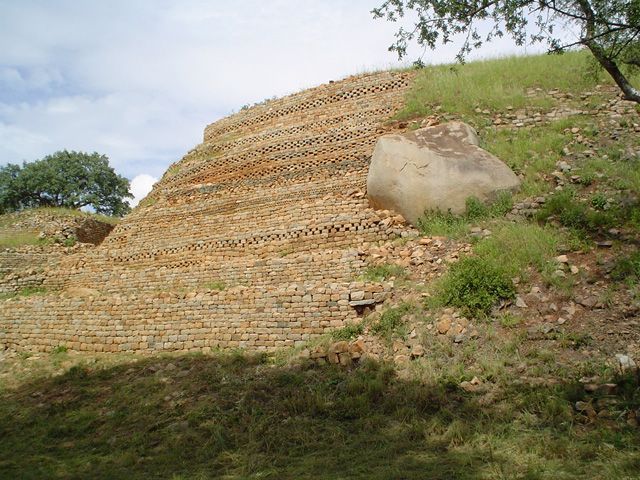
Designed as the political and spiritual heart of the Torwa dynasty, Khami built on the legacy of Great Zimbabwe while innovating with engineered terraces and retaining walls to adapt to the local environment. The stone terraces elevated elite residences—keeping them cooler and safer from malaria—demonstrating social hierarchy through architecture.
The site features elaborately decorated stonework: checkerboard, chevron, herringbone, and corded designs—unique artistic expressions marking both craftsmanship and identity. The Precipice Platform remains the most impressive example.
Importantly, Khami was a hub for long-distance trade—excavations have uncovered quantities of 16th/17th-century Ming porcelain, Portuguese-Chinese ware, and Spanish silver, linking the kingdom to coastal and global markets.
After its abandonment, the site remained culturally significant, later falling into neglect. Since UNESCO inscription, local and national heritage bodies have engaged in stabilisation of walls, environmental management, and interpretation through the on-site museum.
.
Sources: UNESCO, Wikipedia, Medium – “Whispers in Stone”, Natural History Museum Zimbabwe, African World Heritage Sites, Khami site conservation report.