UNESCO World Heritage Site since 1979.
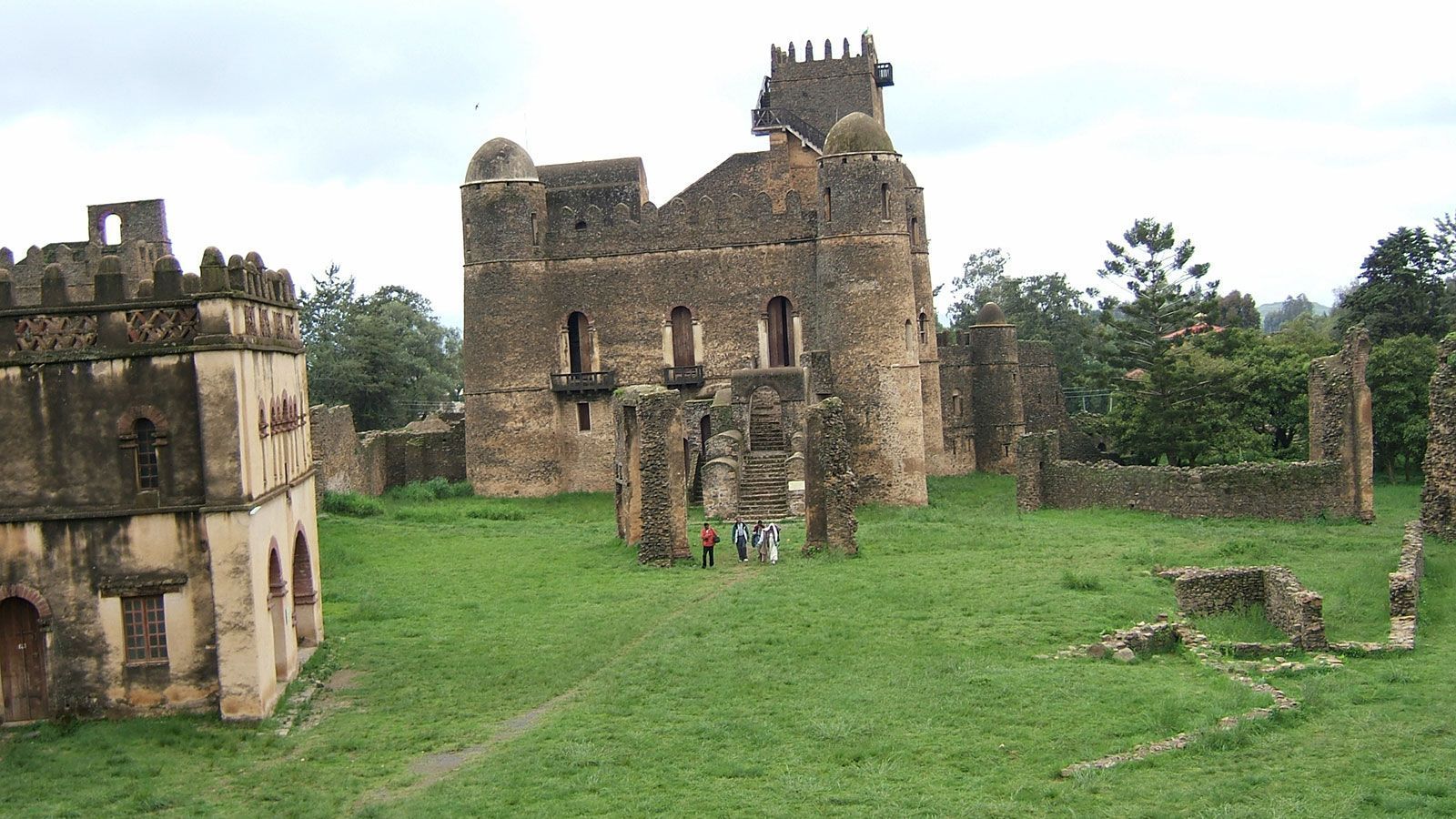
The Fasil Ghebbi is a walled royal fortress-city constructed in the 17th century by Emperor Fasilides and continued by his successors. Surrounded by a 900 m-long curtain wall, the compound houses palaces, churches, a library, stables, and bathhouses. The architectural style blends Hindu, Arab, Portuguese, and Baroque influences, resulting in a singular Ethiopian castle complex.
Fasil Ghebbi marks a clear departure from the peripatetic tradition of Ethiopian rulers. It created a permanent imperial capital centered around a fortress-city, symbolizing political stability and modernity. The site’s eclectic architecture blends multiple foreign influences with native techniques—reflecting Ethiopia’s openness to global ideas within a distinctly Ethiopian context.
Within the cliff-like enclosure, each major building expresses the reign of its patron:
- Fasilides’ castle, with its domed turrets and defensive outlook, stands as the emblematic central palace.
- Iyasu I’s palace featured vaulted ceilings and Venetian glass interiors.
- Dawit’s Banquet Hall served as a ceremonial gathering space.
- Libraries, chanceries, stables, and churches reveal the administrative, religious, and social complexity of the Gondarine state.
The fortress-city reflects Ethiopia’s geopolitical reach, combining local traditions with global stylings. It remained the seat of imperial power for over two centuries. Today, it stands as a “Camelot of Africa”—a beacon of Ethiopia’s 17th–19th century grandeur and a testament to skillful restoration and preservation.
.
Sources: UNESCO World Heritage Centre, Wikipedia, Brilliant Ethiopia.