UNESCO World Heritage Site since 1986.
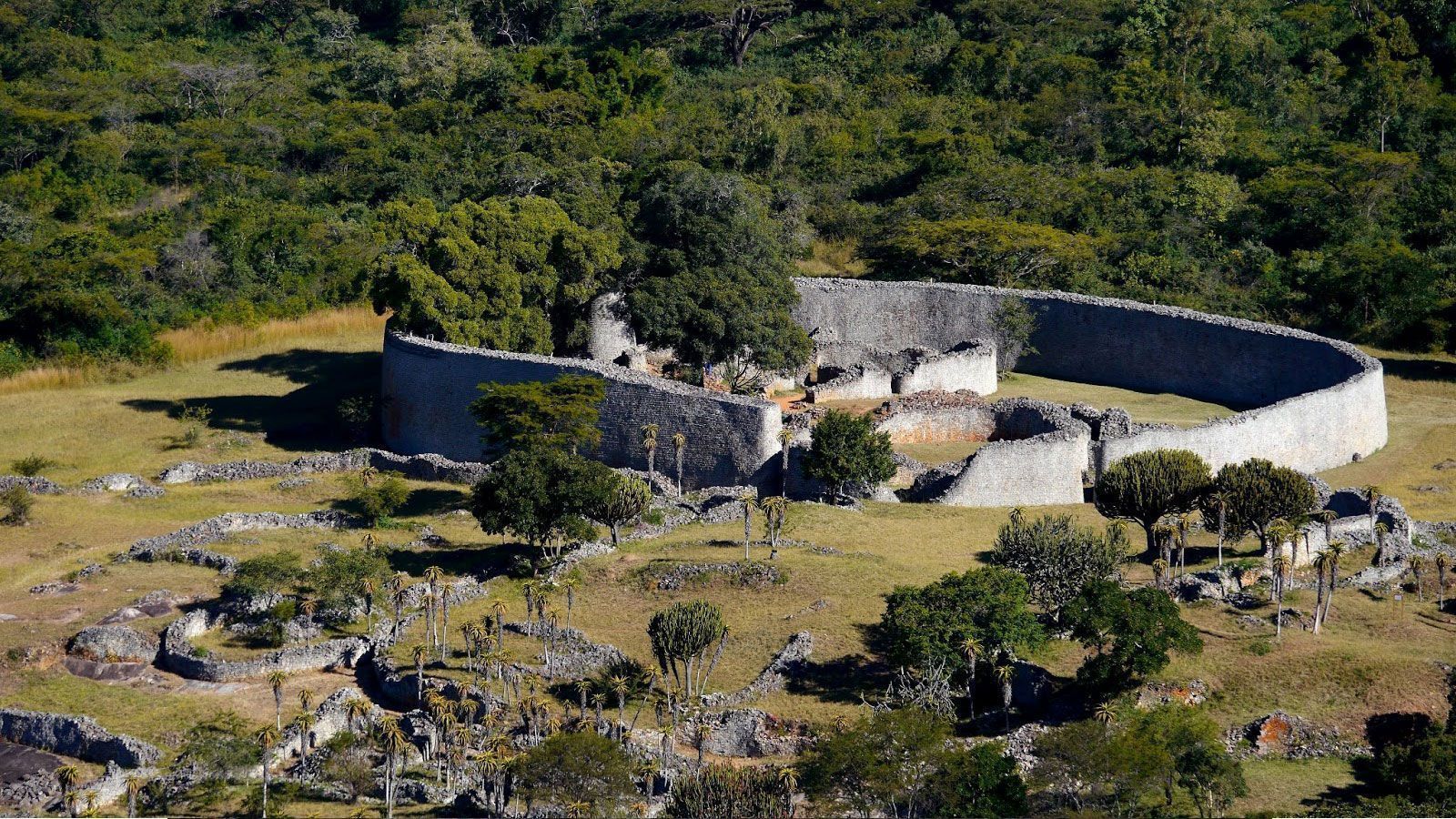
Great Zimbabwe, the monumental capital of the medieval Kingdom of Zimbabwe, represents the largest precolonial stone settlement in sub‑Saharan Africa. Constructed between the 11th and 15th centuries, this vast complex of magnificent dry‑stone walls and enclosures was built without mortar by the ancestors of the Shona people. Its decline in the 16th or 17th century remains subject to debate.
Great Zimbabwe stands atop a granite ridge overlooking expansive terraces descending to the valley. Its most iconic feature, the Great Enclosure (14th c.), is a sprawling stone oval with walls rising nearly 10 m and enclosing a distinctive conical tower—perhaps used for rituals or elite residence. Its concentric inner walls add mystery to the structure’s purpose.
The Hill Complex, known as the acropolis, was the spiritual and political heart, with thick walls up to 11 m high and 6 m thick, incorporating natural boulders. It contained platforms, monoliths, and spaces likely reserved for the ruler and ceremonial activities.
Across the Valley Ruins, archaeologists uncovered evidence of dense domestic settlement, craft workshops, and storerooms—indicating complex social stratification and sustained population. Objects such as soapstone bird sculptures, copper, iron tools, porcelains, and glass beads demonstrate both spiritual practice and extensive trade networks.
At its zenith between 1200–1450, Great Zimbabwe oversaw a state likely covering ~50,000 km², serving as a hub of political authority, religiosity, and economic exchange. Its decline may be attributed to changing trade, resource constraints, or shifting political power to successor states like the Mutapa and Torwa kingdoms.
Today, Great Zimbabwe continues to captivate visitors and scholars. It embodies transcendent workmanship, has inspired African identity after overcoming colonial misrepresentations, and remains a touchstone of scholarly inquiry into indigenous African civilization.
.
Sources: Wikipedia, UNESCO World Heritage Centre, National Geographic Education / Smarthistory / RethinkingTheFuture, Britannica / Met Museum, WorldHeritageSite.