UNESCO World Heritage Site since 1979.
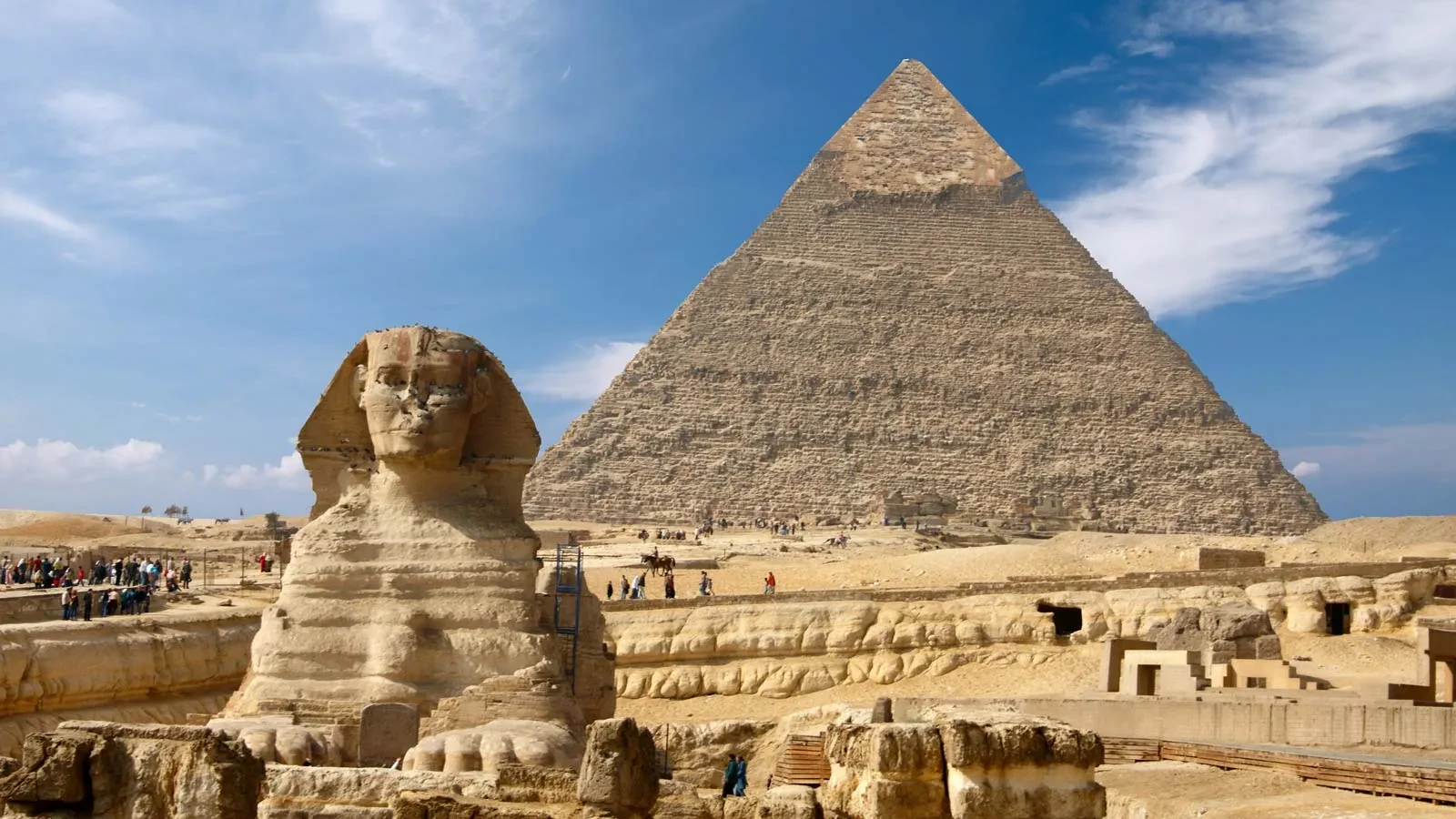
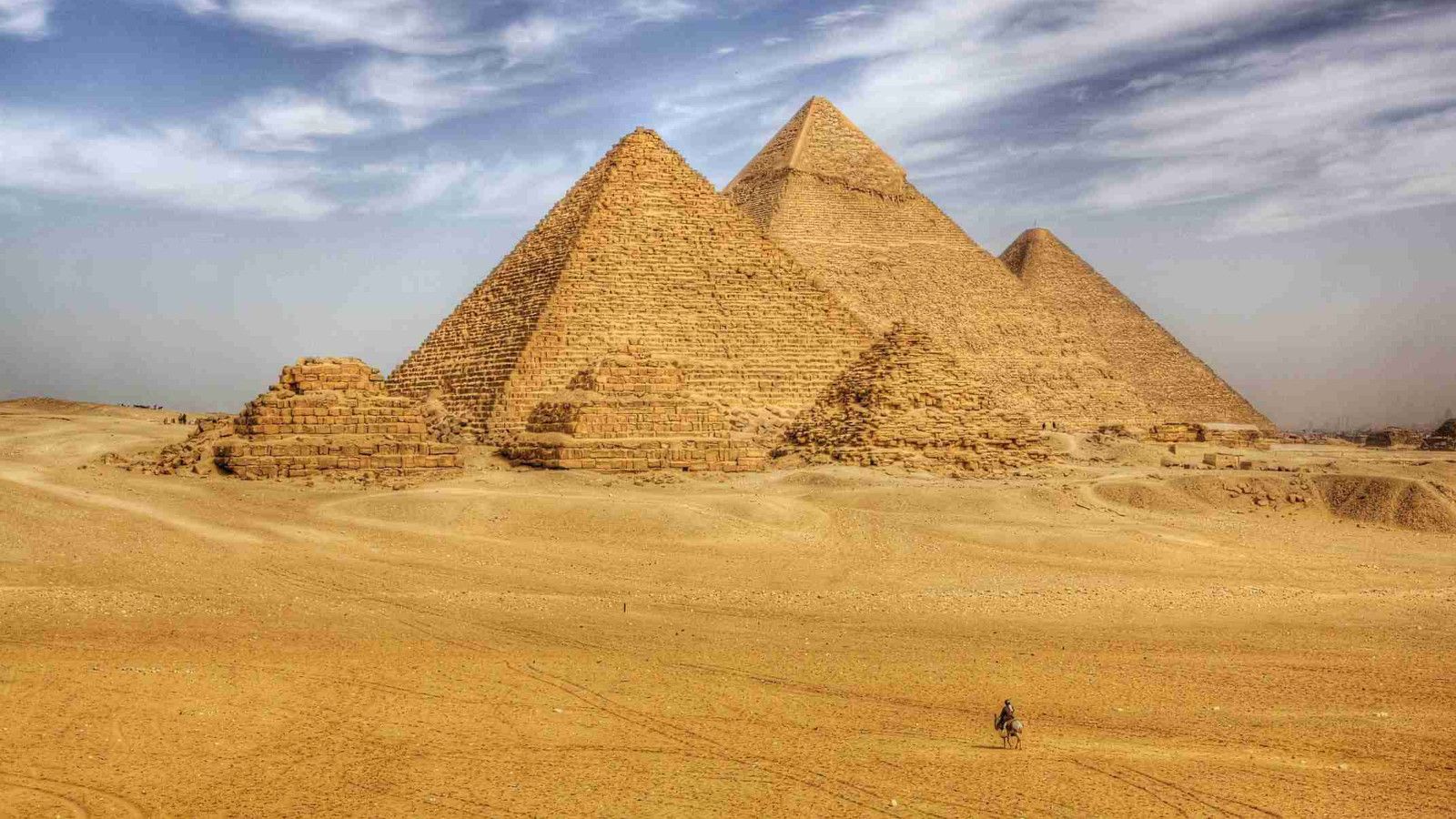
The monumental ensemble of the Giza Plateau—comprising the Great Pyramids of Khufu, Khafre, and Menkaure, along with the Great Sphinx—is the most iconic expression of Ancient Egypt’s architectural and cultural achievement. Constructed during the Fourth Dynasty of the Old Kingdom, these structures served as elaborate funerary complexes designed to ensure the eternal life of the pharaohs.
The Great Pyramid of Khufu, originally standing at 146.6 meters, was the tallest man-made structure in the world for over 3,800 years. Built from approximately 2.3 million limestone and granite blocks, it reflects advanced knowledge in surveying, astronomy, and logistics. The Pyramid of Khafre, slightly smaller, retains portions of its original limestone casing. Adjacent stands the Great Sphinx, a colossal statue with a lion’s body and a human head, symbolizing royal power and guardianship. Measuring 73 meters long and 20 meters high, it is believed to represent Pharaoh Khafre.
The broader necropolis includes mortuary temples, causeways, subsidiary pyramids, mastaba tombs, and evidence of an organized workforce, including housing and supply depots. These reveal a complex state apparatus capable of mobilizing and managing thousands of laborers and artisans.
The Pyramids of Giza were not isolated monuments but integral to a sacred landscape oriented toward the celestial and solar cycles. Their alignment with the cardinal points and the layout of associated temples and cemeteries reflect deep religious and cosmological significance.
Today, the site continues to be an enduring symbol of human ingenuity and spiritual aspiration. Ongoing archaeological work, including non-invasive scanning techniques, has led to new discoveries such as hidden cavities within Khufu’s pyramid, expanding our understanding of ancient Egyptian construction and ideology.
Source: UNESCO World Heritage Centre, Egypt’s Supreme Council of Antiquities, Egyptological scholarship, Archaeological record.