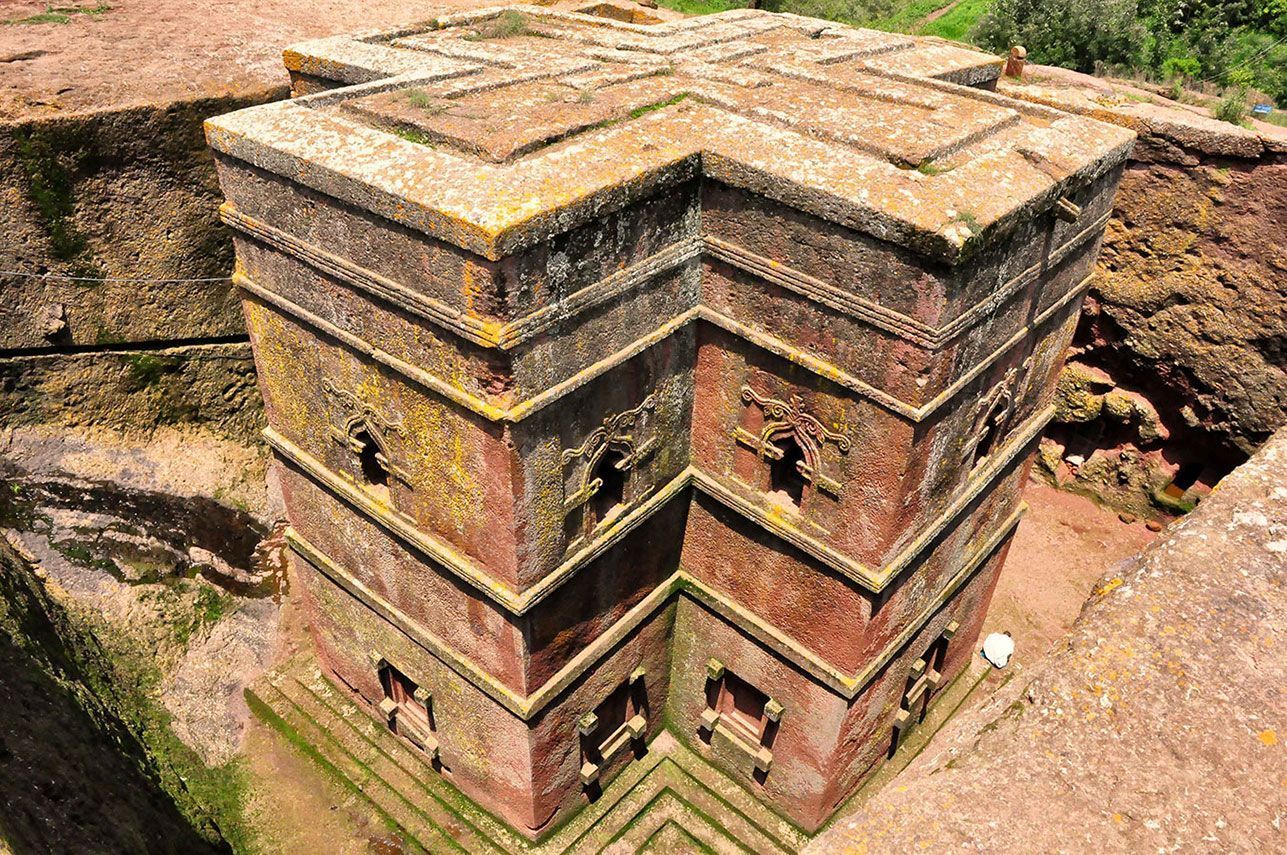
UNESCO World Heritage Site since 1978.
The Rock‑Hewn Churches of Lalibela represent a monumental series of eleven monolithic churches carved directly from volcanic rock in the 12th and 13th centuries. Commissioned by King Gebre Meskel Lalibela of the Zagwe dynasty, these churches were conceived as a “New Jerusalem” after the fall of original pilgrimage routes—embodying both spiritual aspiration and architectural innovation.
Nestled high in Ethiopia’s mountainous terrain, the Lalibela churches symbolize a visionary act of devotion and engineering mastery. Carved from a single rock mass, they include:
- Biete Medhani Alem: one of the world’s largest rock‑cut churches, inspired by Aksumite temple design.
- Biete Maryam, Golgotha Mikael, Meskel, Denagel, among others—arranged in symbolic configurations that reflect Jerusalem’s layout and Christian cosmology.
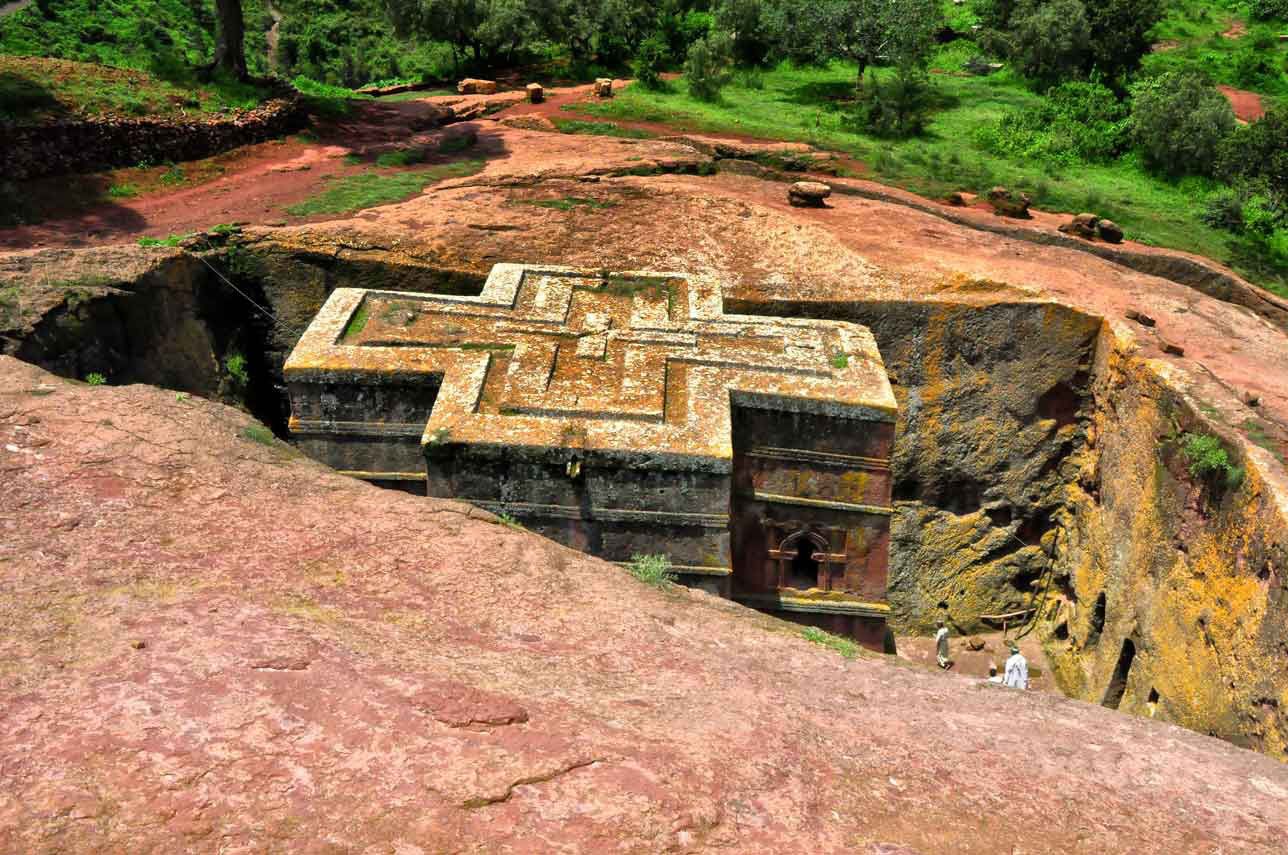
- Biete Ghiorgis (St George): the iconic freestanding cruciform church, often dubbed the “Eighth Wonder of the World,” exquisitely carved and revered as Lalibela’s spiritual centerpiece.
Each church is adorned with carved moldings, elegant fenestration, and underground passages linking complexes across a trench network. Inside, carved columns and wall niches mirror surface form in stone.
The annual Crépissage of Djenné, Lalibela’s own plaster renewal and communal festival, unites artisans, clergy, and citizens in maintaining the churches—a living testament to community stewardship.
Beyond its engineering marvel, Lalibela remains a softly luminous pilgrimage town where ancient chants, priestly robes, and candlelight illuminate stone halls—a continuous thread of Ethiopia’s earliest Christian traditions.
.
Sources: UNESCO World Heritage Centre, Wikipedia, Met Museum essay, World Monuments Fund, EthiopianTourAssociation, Brilliant Ethiopia.