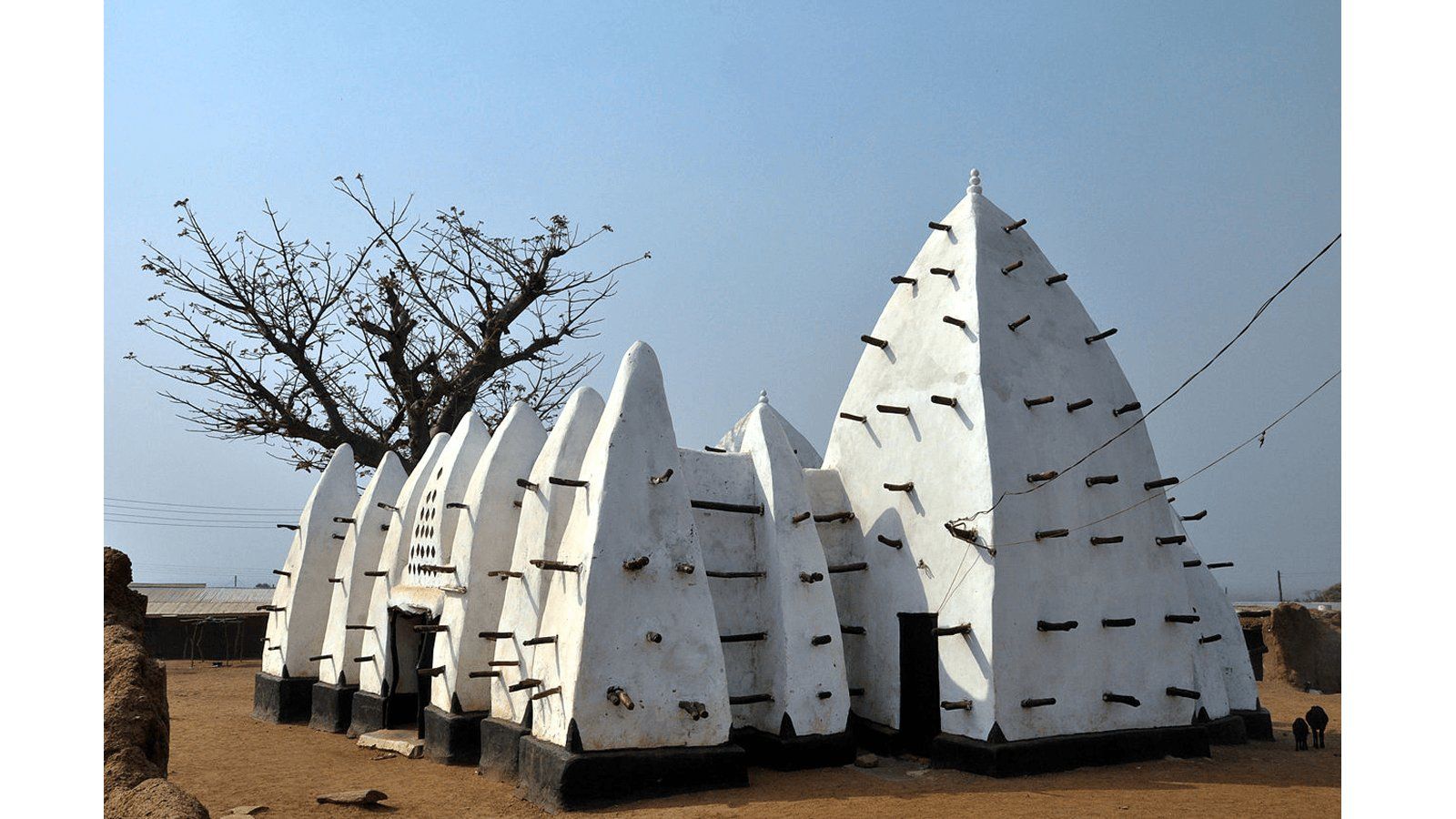
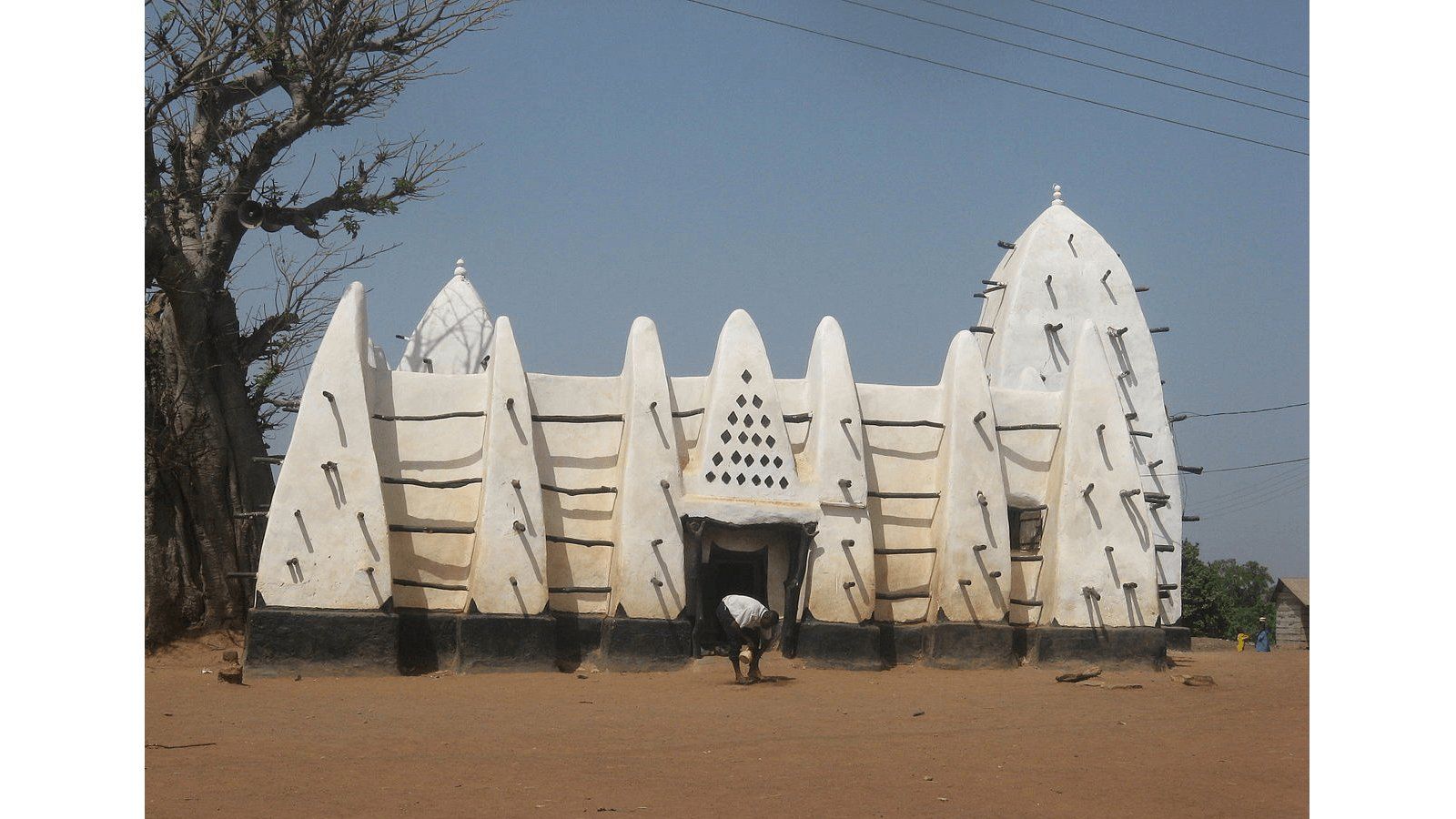
This iconic mud-and-stick mosque—built in the Sudano-Sahelian architectural style—is Ghana’s oldest and one of West Africa’s earliest religious structures. According to tradition, it was founded in 1421 by an Islamic trader named Ayuba, making it a symbol of the region’s Islamic heritage and a community pilgrimage site. It was declared a heritage monument under Ghanaian law and has received UNESCO-related conservation support.
Nestled under a sacred baobab tree, the mosque’s compact, square plan typifies Sudano-Sahelian earthen architecture. Its sculptural towers and protruding wooden poles evoke both structural utility and aesthetic rhythm. Construction uses locally sourced earth mixed with organic binders and reinforced with timber—materials requiring constant maintenance due to weather exposure.
Despite its modest size, Larabanga Mosque carries great spiritual weight within Muslim communities and serves as a touchstone for regional identity. Its legend of divine foundation, connection to an ancient Qur’an, and tradition of pilgrimage underscore its cultural resonance.
After decades of structural decline from improper cement treatment and termite damage, the mosque underwent a significant restoration in 2003. Local masons, trained by CRATerre and supported by WMF, restored the building to its original form, reviving earthen craftsmanship and traditional plastering methods. The renewed structure continues as a living, functioning mosque managed by the local community.
.
Sources: Wikipedia, Visit Ghana / Ghana Museums & Monuments Board, World Monuments Fund & Atlas Obscura, UNESCO Tentative List details on Sudanic mosques.