UNESCO World Heritage Site since 1979.
The Archaeological Site of Carthage is one of the most emblematic locations in Mediterranean antiquity, spanning the legacies of Phoenician, Roman, early Christian, Vandal, and Byzantine civilizations. Founded in the 9th century BCE by Phoenicians from Tyre, Carthage developed into a powerful maritime empire and rival to Rome. After its destruction in 146 BCE during the Third Punic War, the Romans rebuilt the city, turning it into the capital of Africa Proconsularis.
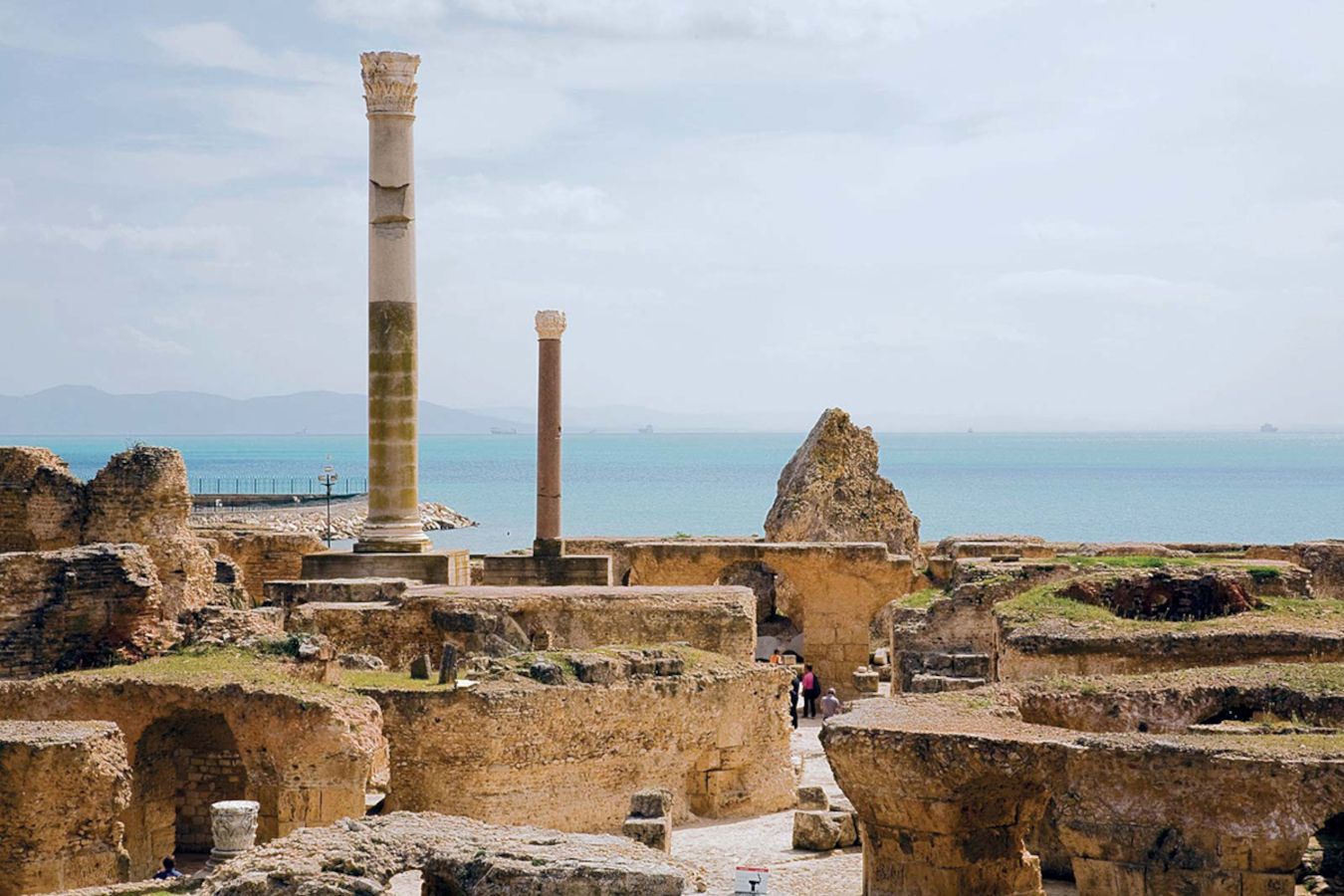
Among the most prominent features of Roman Carthage are the Baths of Antoninus, one of the largest public bath complexes built outside Rome, showcasing vaulted chambers, sea-facing colonnades, and expansive hypocaust systems. Also notable are the Punic Tophet, a sacred cemetery linked to Carthage’s early religious rites, and the cisterns of La Malga, which formed part of a sophisticated Roman water system fed by aqueducts.
Byrsa Hill, the historic heart of the Punic city, offers layers of archaeological strata that include Roman villas with intricate mosaics and remnants of Christian basilicas from the 5th and 6th centuries. Though Carthage declined in later periods, it remained inhabited and was a key ecclesiastical center during early Christianity.
Excavations began in the 19th century and intensified in the 20th, leading to the site’s protection under Tunisian and international heritage programs. Today, Carthage is a vast archaeological park offering a physical narrative of millennia, marked by conquest, transformation, and resilience. Its designation as a UNESCO World Heritage Site underscores its global significance as a testimony to cultural exchange and imperial legacy in the Mediterranean world.
Source: UNESCO World Heritage Centre, Encyclopaedia Britannica, African World Heritage Sites, Tunisian National Heritage Institute, Carthage Museum.