
UNESCO World Heritage Site since 1988.
Timbuktu, on the edge of the Sahara, became a powerful center of Islamic culture and commerce from the 13th to 16th centuries. Located near the Niger River and intersecting major caravan routes, it was ideally positioned to thrive as a hub of trans-Saharan trade and intellectual exchange. Gold, salt, ivory, and books moved through the city, while scholars, students, and scribes cultivated a vibrant religious and academic culture.
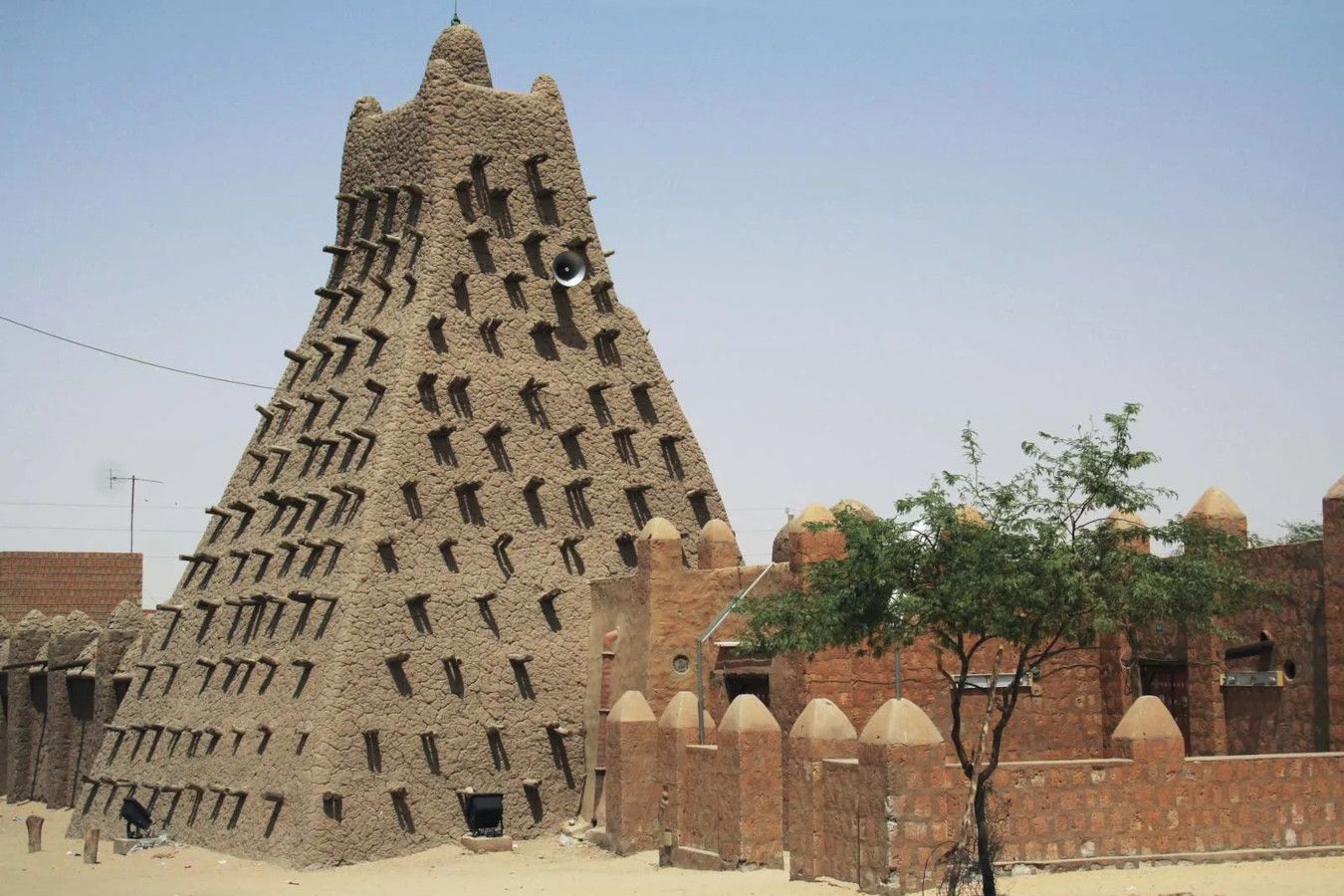
Three principal mosques—Djinguereber, Sankore, and Sidi Yahia—anchor Timbuktu’s architectural legacy. These structures are quintessential examples of Sudano-Sahelian architecture: made from sun-dried mud bricks reinforced by wooden beams that double as scaffolding supports during seasonal replastering. Each mosque also served as a center of learning, particularly Sankore, which housed one of the most important Islamic universities in Africa during the 15th century.
Timbuktu’s heritage extends beyond architecture. At its peak, the city held tens of thousands of handwritten manuscripts covering theology, astronomy, medicine, law, and mathematics. Preserved in family collections and private libraries, many of these texts date back to the 13th century and are written in Arabic or Africanized Arabic scripts.
In 2012, armed groups damaged or destroyed several mausoleums and libraries. However, subsequent restoration, led by local masons using traditional methods, successfully rebuilt many of these structures. Timbuktu remains on the World Heritage in Danger list, due to continued threats from desertification and conflict, but it stands as a powerful symbol of cultural endurance.
Source: UNESCO World Heritage Centre, Encyclopaedia Britannica, African World Heritage Sites.