UNESCO World Heritage Site since 1982.
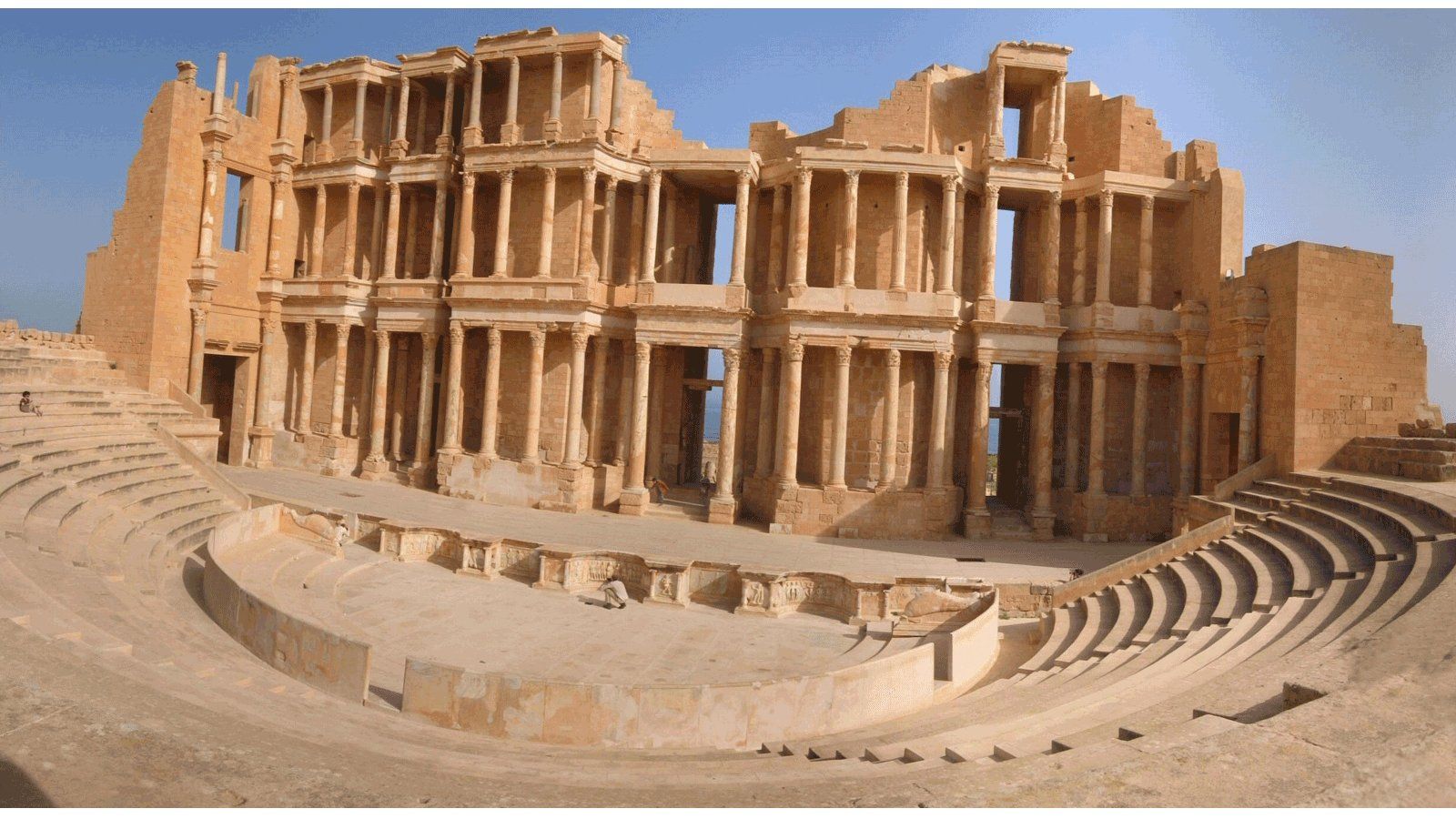
Sabratha—an ancient Phoenician coastal settlement later developed into a Roman city—stands as a striking testament to North Africa’s classical urban heritage. Noted for its spectacular Roman theatre and coastal layout, it was inscribed as a UNESCO World Heritage Site in 1982 under criterion (iii) for its testimony to cultural interchange and Roman architectural achievement. The site remains on the List of World Heritage in Danger since 2016–17, threatened by political instability, erosion, vegetation growth, and urban encroachment.
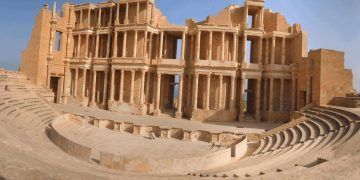
Nestled on Libya’s Mediterranean coastline, Sabratha originated as a Phoenician export hub tied to trans-Saharan trade, eventually becoming a hub of cultural exchange and wealth. Its transformation into a Roman city saw the construction of grand public buildings—most notably the Roman Theatre, whose reconstructed stage wall spans 22 m and blends architectural artistry with social hierarchy through its three-tier design and sculptural decoration.
Beyond the theatre, the site features thermal baths and a port-facing forum displaying floor mosaics, as well as temples devoted to various deities, reflecting the cosmopolitan religious life of classical Sabratha. A Byzantine church later integrated into the urban fabric, illustrating the continuity of occupation and cultural adaptation.
Since excavation began in 1926 under Italian rule and continued by British teams mid‑20th c., especially focused on the theatre, modern efforts have aimed at restoring and conserving key structures. But from 2011 onwards, regional instability, funding gaps, weathering, and unchecked development have placed the site at risk .
Today, Sabratha stands as a vivid cultural landscape—an artifact of ancient urbanism, engineering prowess, and cross-cultural lives. Its dramatic coastal setting and monumental stage continue to inspire scholars and visitors, even as local and international bodies work toward its preservation.
Source: Wikipedia, UNESCO World Heritage Centre, AfricanWorldHeritageSites.org, Britannica / History Hit