UNESCO World Heritage Site since 2024.
Nestled at the base of Mount Tchébilí in southern Burkina Faso, the Royal Court of Tiébélé is a living architectural ensemble and cultural heart of the Kassena people. Dating from the 16th century, it was inscribed as a UNESCO World Heritage Site in 2024 under criterion (iii) for its exceptional representation of traditional earthen architecture, gendered construction roles, and continuity of sociocultural practices.
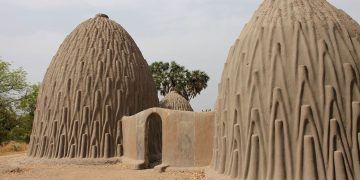
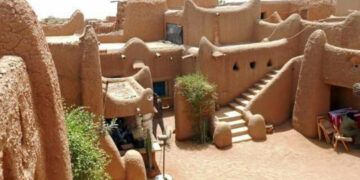
Tiébélé’s royal complex remains a vibrant demonstration of Kassena vernacular architecture and societal structure. Built jointly by men and women under traditional roles, the cob-built huts are arranged in distinct family groups known as “concessions,” each including three house types serving different social members—elders, married couples, and youths.
Women artists decorate the walls with elaborate murals each year, combining symbolic design and practical conservation. These murals—painted with natural pigments and polished to protect the earth—depict patterns referencing heritage items (pipes, cloth), ancestral lineage, and animistic beliefs.
The compound also includes sacred elements: the pourou (sacred mound for royal placentas), dala stones (assembly seats), a shrine-courtyard for customary trials (nankongo), and a royal cemetery (bonnalè), underscoring the site’s spiritual and judicial functions.
Despite modern pressures—new material use, erosion, and drainage concerns—the annual repainting events, structured through ceremonial gatherings, ensure the site remains culturally and physically vibrant. Continued UNESCO and community-based efforts aim to safeguard the authenticity and functional continuity of this rare living earthen heritage site.
.
Sources: UNESCO World Heritage Centre, Wikipedia, Bradt Guides.