UNESCO World Heritage Site since 2001.
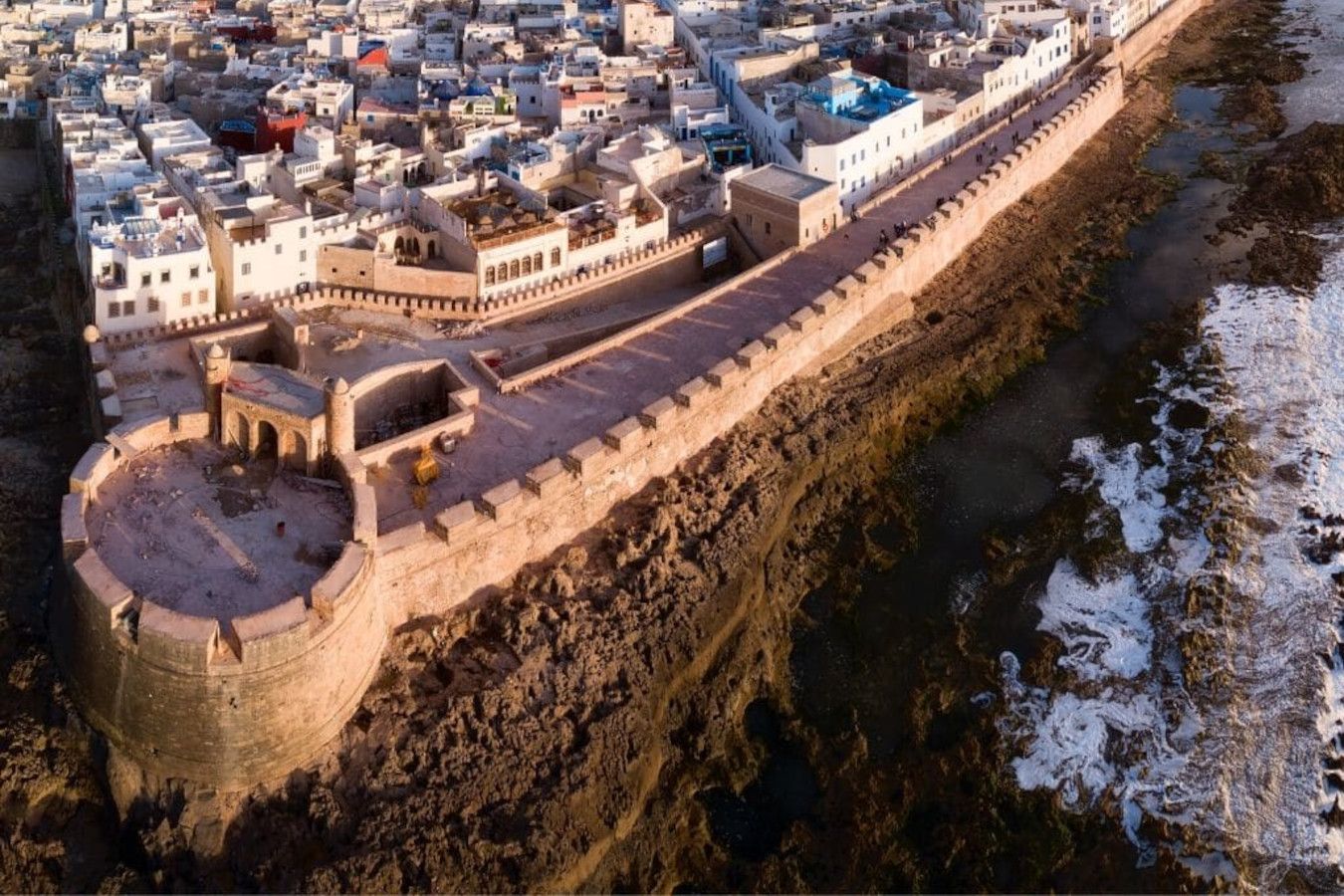
The Medina of Essaouira, formerly known as Mogador, is a unique 18th-century fortified port city reflecting a harmonious blend of European military architecture and North African urban planning. Commissioned by Sultan Mohammed ben Abdallah in 1760, it was designed by the French engineer Théodore Cornut based on Vauban-style principles and adapted by skilled Moroccan artisans. The result was a grid-like layout unusual for medinas, integrating military efficiency with traditional Islamic urban elements.
Its formidable sea-facing walls, including the Skala de la Ville and Skala du Port, are lined with historic bronze cannons and serve as enduring symbols of maritime defense. Behind them, the medina reveals a tapestry of influences: whitewashed buildings with blue shutters, arched souks, riads, Jewish mellah quarters, and artisan quarters. Essaouira quickly became a melting pot of Amazigh, Arab, European, Jewish, and African cultures, functioning as an important trade hub between Morocco, Europe, and sub-Saharan Africa.
Public spaces are interspersed with religious, civic, and commercial landmarks. Landmarks like the Sidi Mohammed ben Abdallah Museum and Bayt Dakira preserve the city’s spiritual and cultural diversity. Essaouira’s medina has maintained much of its authenticity and continues to host traditional fishing communities, craftsmen, and music festivals.
Since its UNESCO inscription in 2001, conservation efforts have successfully balanced urban heritage with contemporary life. The city is part of UNESCO’s Creative Cities Network, and its famed Gnaoua World Music Festival has helped revitalize interest in intangible cultural heritage. Essaouira stands today not just as a historic site, but as a vibrant living city rooted in tolerance and creativity.
Source: UNESCO World Heritage Centre, African World Heritage Sites, Wikipedia, World Heritage Site review.