UNESCO World Heritage Site since 2004.
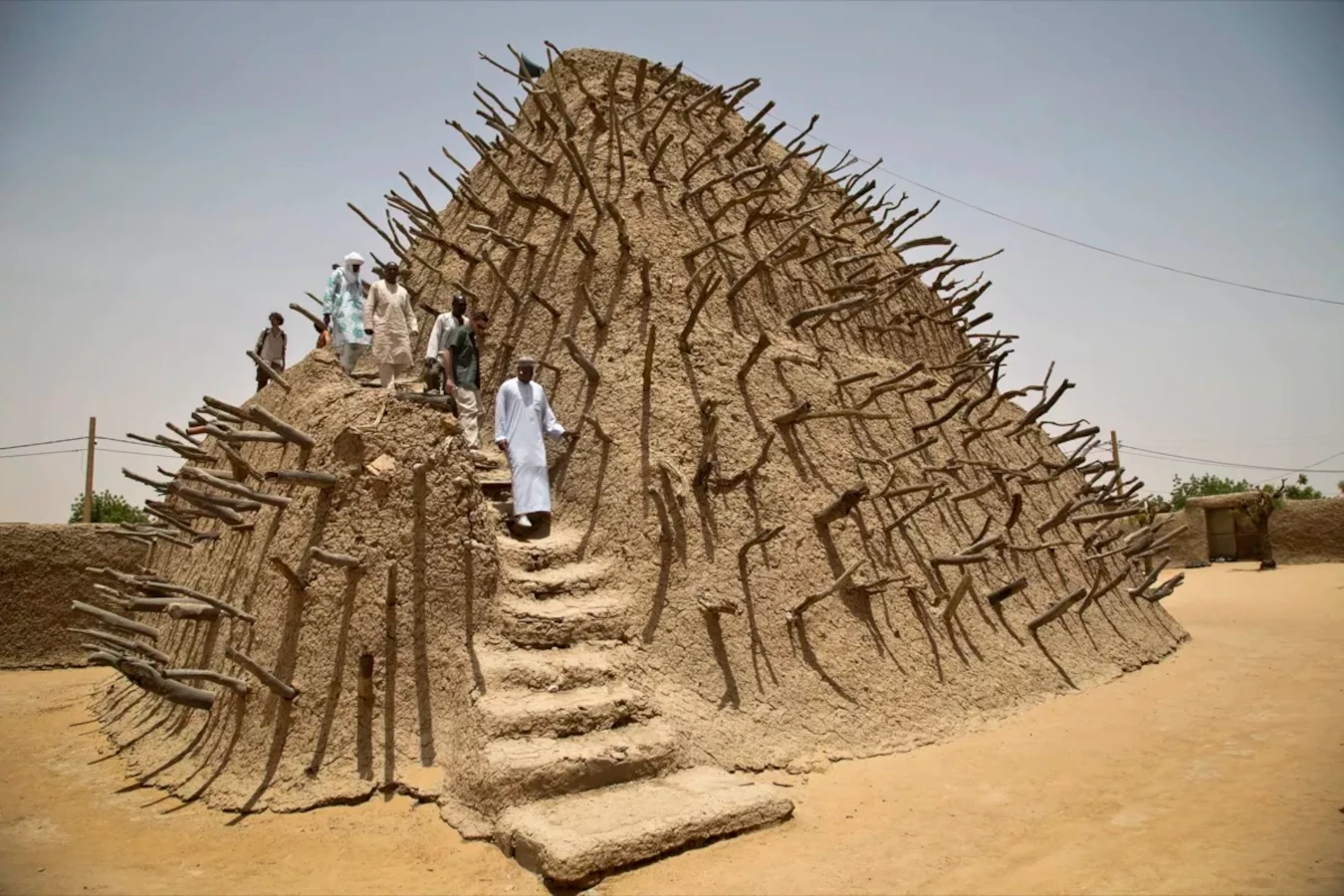
The Tomb of Askia in Gao is a monumental mud-brick structure erected in 1495 by Askia Mohammad I, the Songhai Empire’s prominent ruler. This 17-metre-tall pyramidal tomb combines religious and funerary functions and stands as the largest pre-colonial architectural monument in West Africa. Designed in the Sudano-Sahelian tradition, it integrates elements of Islamic influence with indigenous building techniques, representing a key architectural transition in Sahelian urbanism.
The complex includes two small mosques with flat roofs, a cemetery, and a public assembly area. Its pyramidal tower also functions as a minaret, embodying both spiritual and ceremonial roles. Built shortly after Askia’s return from pilgrimage, the site reflects the elevation of Islam within the empire, with the tomb serving as a dynastic symbol and religious landmark.
Over the centuries, the Tomb of Askia remained in continuous ceremonial use, partly due to regular replastering that ensured its structural integrity. However, conflict and climate have occasionally threatened its stability—loss of columns and erosion prompted its addition to the UNESCO World Heritage in Danger list in 2012. Conservation efforts have since prioritized traditional maintenance methods, structural reinforcement, and community engagement to preserve its authenticity.
Recognized for illustrating the combined impact of Islamic faith and West African architecture, the tomb meets UNESCO criteria for exhibiting cultural exchanges (ii), being an outstanding testament to the Songhai Empire (iii), and exemplifying Sahelian Sudano-Islamic architecture (iv). Today, the site remains an active mosque and a powerful symbol of historical continuity and cultural identity in Gao.
Source: UNESCO World Heritage Centre, Smarthistory, New World Encyclopedia, World Heritage List Summary.