
UNESCO World Heritage Site since 2012.
Bassari Country celebrates three traditional cultures—Bassari, Fula, and Bedik—who, from the 11th to 19th centuries, created a unique cultural landscape harmonized with the environment.
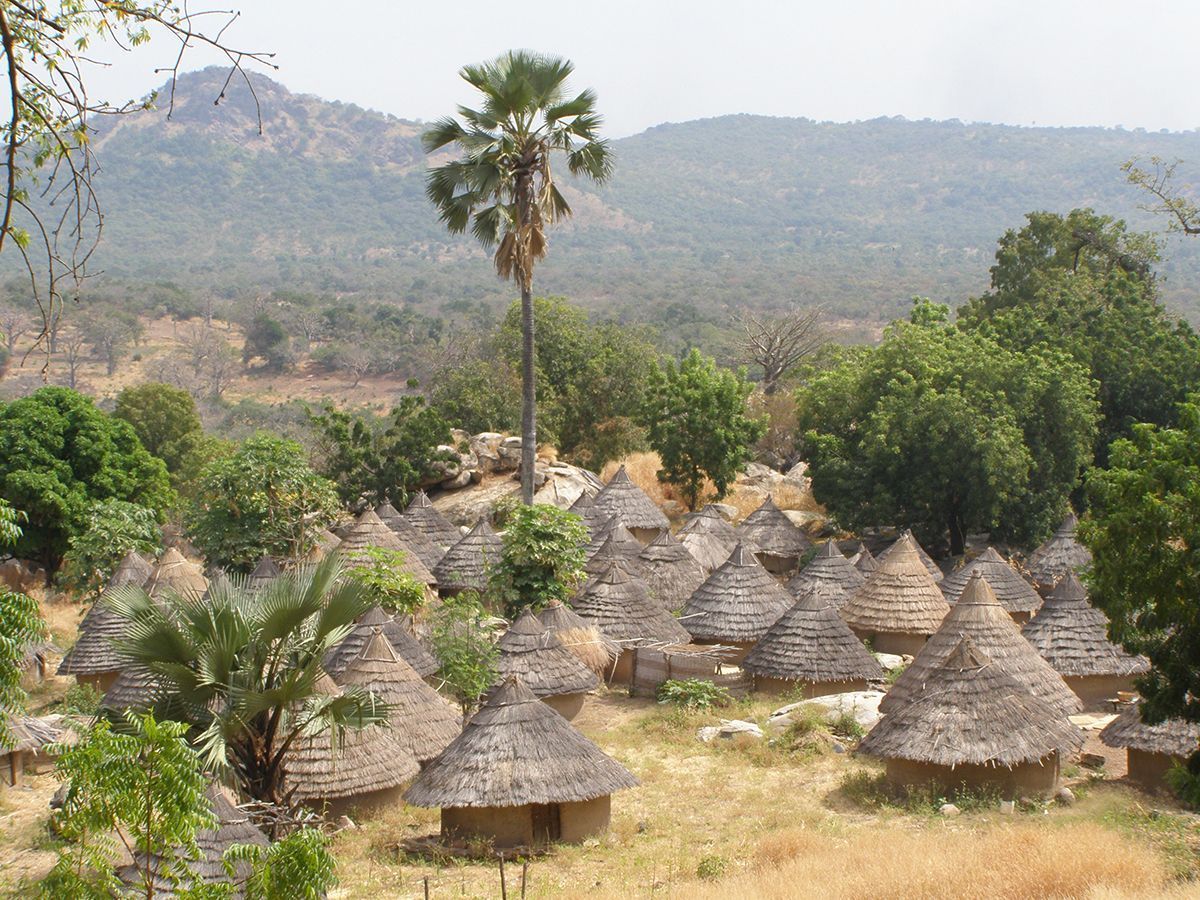
Bassari Country is a rare exemplar of millennia-old human-environment synergy. Bassari villages perch atop rocky hills and manage terraced ricefields below. Bedik communities occupy steep cliff foot zones, forming tightly-knit hut clusters beneath overhangs. Fula settlements find home near the Dindéfello waterfall and savannah margins.
Architectural coherence is anchored by circular mud-and-thatch huts centered around communal spaces used for rituals, village meetings, and ceremonies. Terracing and water management systems showcase deep agro-environmental knowledge.
Cultural vitality continues through chiefdoms, initiation rituals, spiritual ceremonies, and solidarity-driven agriculture—all maintaining identity while facing modernization. The Fonio Festival highlights ecological adaptation and food heritage.
Conservation conservation collaborations emphasize community-driven maintenance of huts, granaries, and sacred sites, along with eco-cultural tourism aimed at reinforcing cultural pride and economic resilience.
.
Sources: UNESCO World Heritage Centre, Wikipedia, AfricanWorldHeritageSites.org, World Monuments Fund / ALIPH.