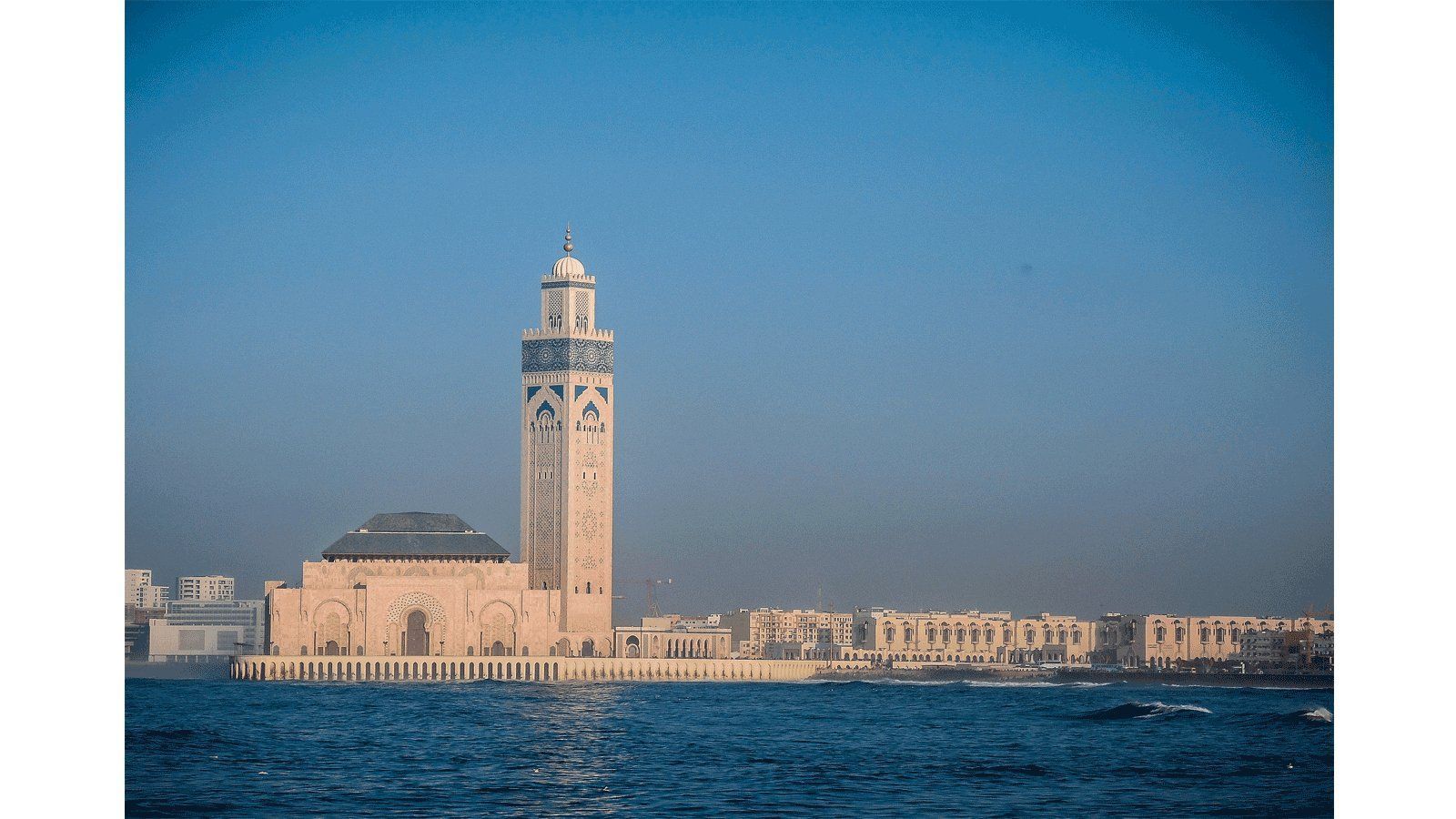
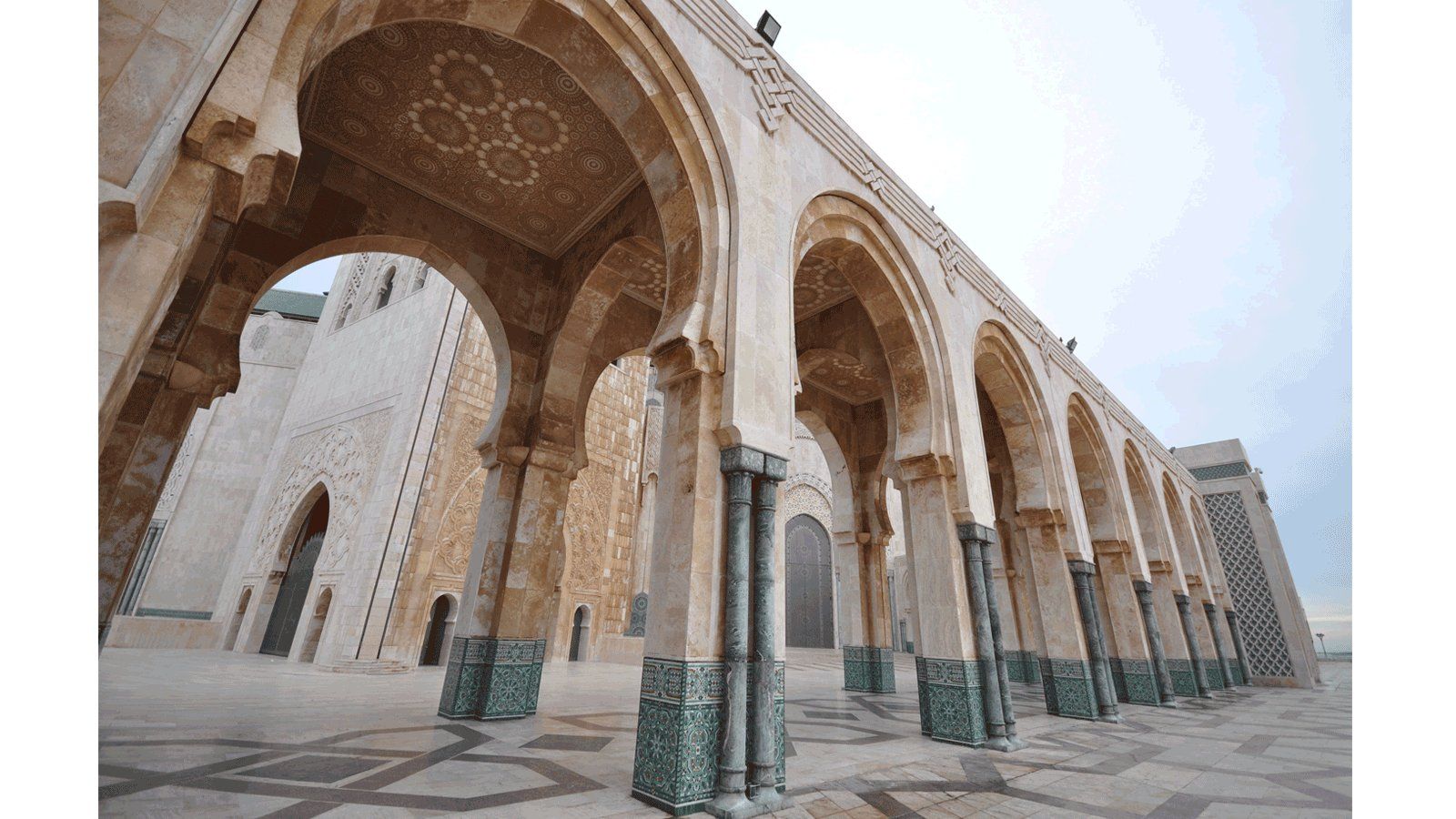
Commissioned by King Hassan II to mark both spiritual devotion and national pride, the Hassan II Mosque is one of the largest and most modern religious monuments in the Islamic world. Completed in 1993, it stands partly over the Atlantic, symbolizing divine presence and national identity, and features the tallest minaret in the world.
Positioned majestically over the Atlantic, the Hassan II Mosque was envisioned by King Hassan II as a symbol of Morocco’s spiritual heritage and modern aspirations. French architect Michel Pinseau designed a monumental structure combining traditional Moroccan craftsmanship with state-of-the-art engineering. Completed in August 1993, the project’s realization required the efforts of over 10,000 artisans and one million labor hours.
Straddling land and sea, the mosque’s prayer hall spans some 20,000 m². It seats 25,000 worshippers indoors, with an expansive courtyard accommodating approximately 80,000 more. The 210‑meter minaret—visible across Casablanca—remains a global landmark, capped by a laser that aligns with Mecca at night.
Inside, the blend of cedar wood ceilings, handcrafted zellij tiling, marble floors, and Murano chandeliers reflect Morocco’s rich material heritage. The retractable roof allows worship under open sky, integrating natural light and prayers. Below, the ablution hall and hammam embody ritual tradition in modern form.
Since 2012, the mosque complex also includes the Academy of Traditional Arts, dedicated to teaching crafts and preserving Moroccan artisan traditions. Despite its size and grandeur, the mosque remains centre to local religious life and a beacon on Casablanca’s Atlantic frontier.
.
Sources: Wikipedia, Mosque Foundation & travel guides.