UNESCO World Heritage Site since 1996.
The Historic City of Meknes stands as a unique architectural and urban masterpiece from the 17th-century Maghreb. Founded in the 11th century by the Almoravids, it evolved into a grand capital under Sultan Moulay Ismaïl of the Alawite dynasty. He transformed Meknes into a fortified imperial city adorned with monumental gates, palaces, granaries, stables, and hydraulic structures. The regular medina, kasbah, and imperial districts are enclosed within soaring ramparts—often reaching 15 meters in height and extending over 40 kilometers in circuit—emphasizing both defense and grandeur.
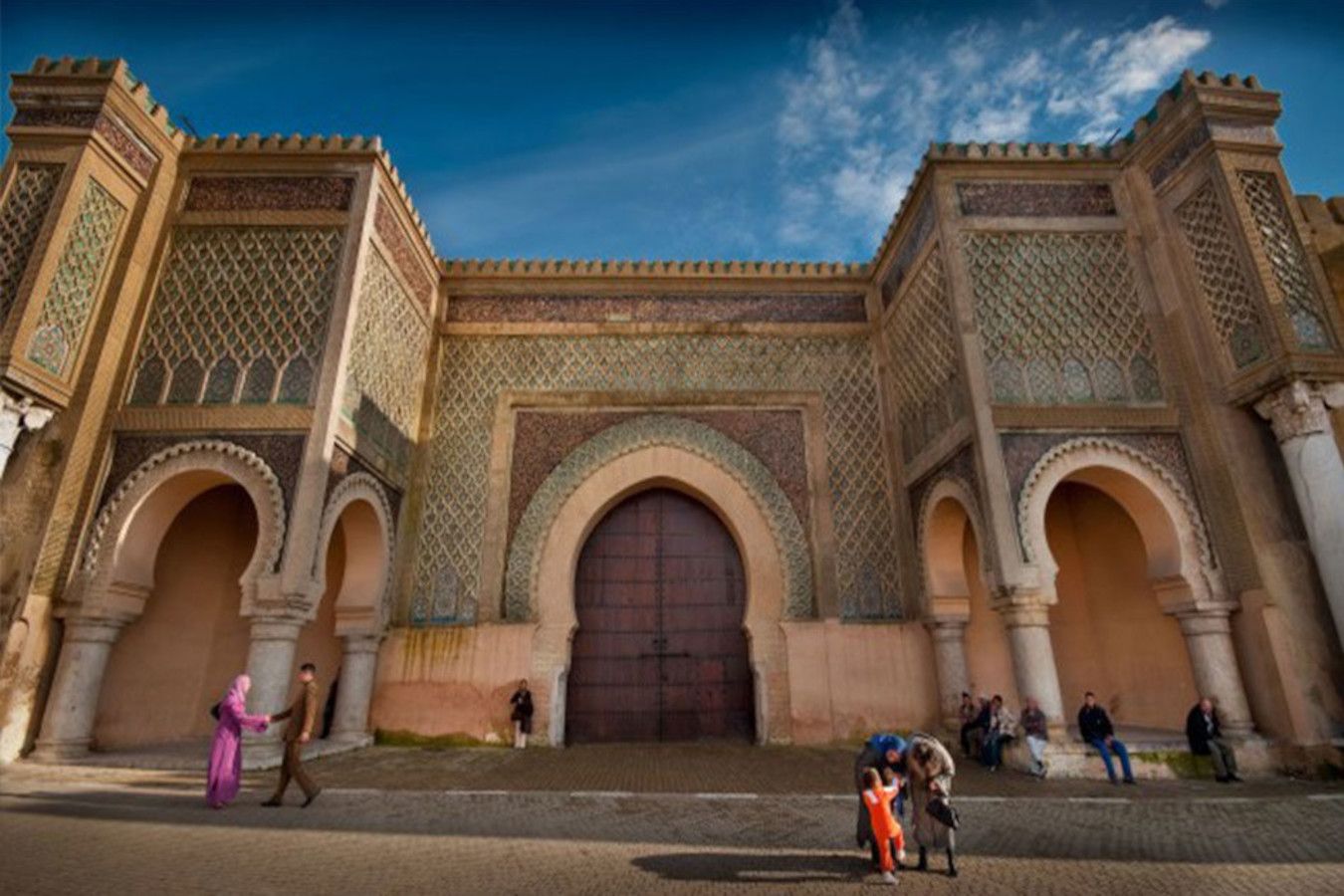
The city’s architecture reflects a harmonious blend of Islamic and European influences, often referred to as Hispano-Moorish style. Bab el-Mansour, the monumental entrance to the imperial city, exemplifies this synthesis with intricate zellij tilework, carved stucco, and fluted marble columns repurposed from the Roman ruins of Volubilis. Within the imperial precinct, the Mausoleum and Mosque of Moulay Ismaïl, the extensive Heri es-Souani stables capable of housing thousands of horses, and the vast granaries demonstrate monumental architecture characterized by vaulted spaces, robust construction, and symmetrical planning.
UNESCO inscribed Meknes in 1996 under criterion (iv) for its exceptionally preserved urban fabric and its representation of a 17th-century imperial capital that coherently integrates Islamic and European planning within a fortified whole.
Today, Meknes remains a vibrant city where traditional markets, religious institutions, artisan workshops, and royal monuments coexist with daily life. Conservation efforts have focused on restoring its defensive walls, preserving intricate tile and plaster work, and rehabilitating historic buildings, particularly following past earthquake damage. Meknes continues to express its living heritage through cultural festivals, traditional crafts, and urban policies aimed at balancing development and preservation.
Source: Wikipedia, UNESCO World Heritage Centre, Morocco World News, African World Heritage Sites, Simply-Morocco.