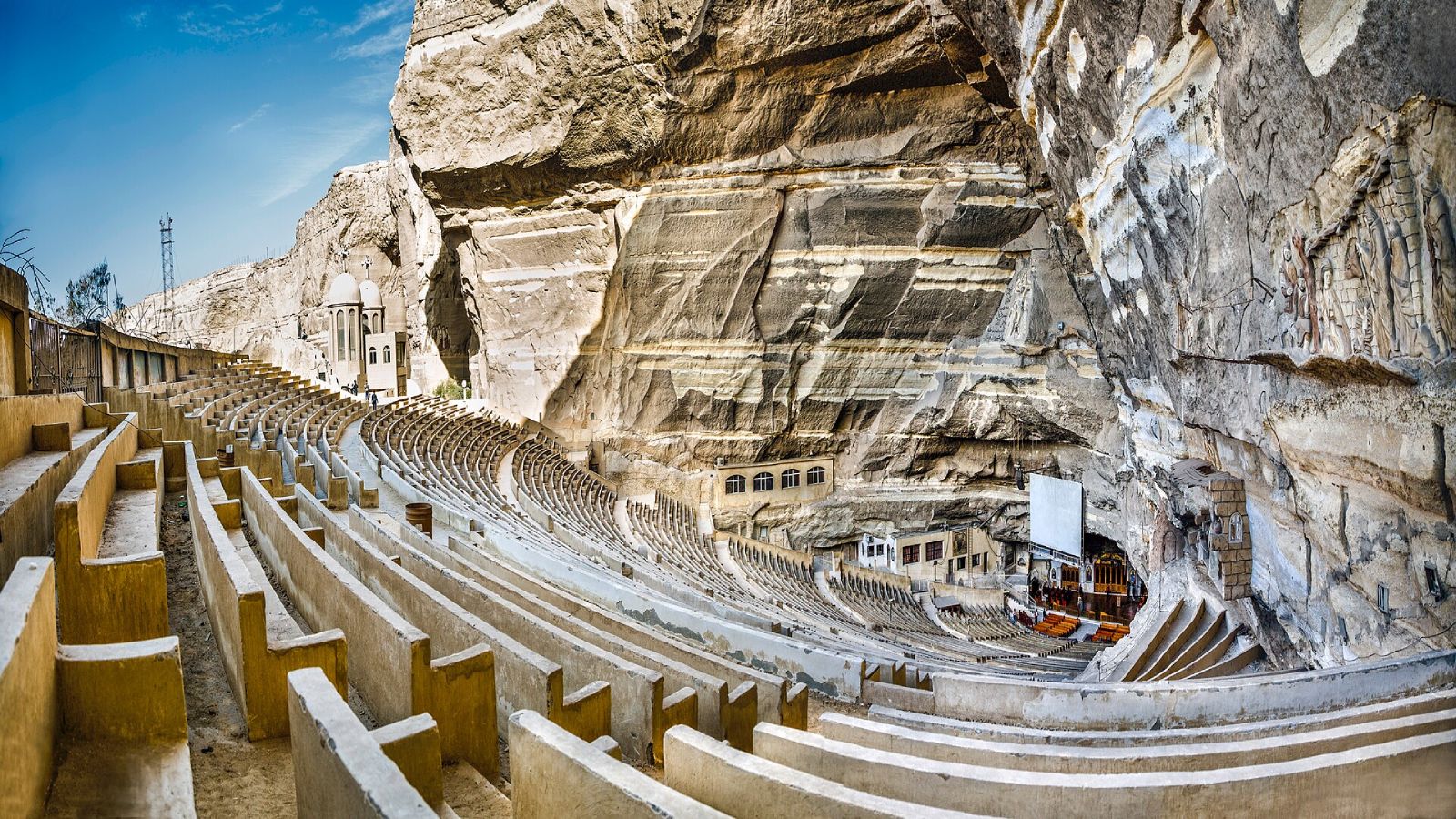
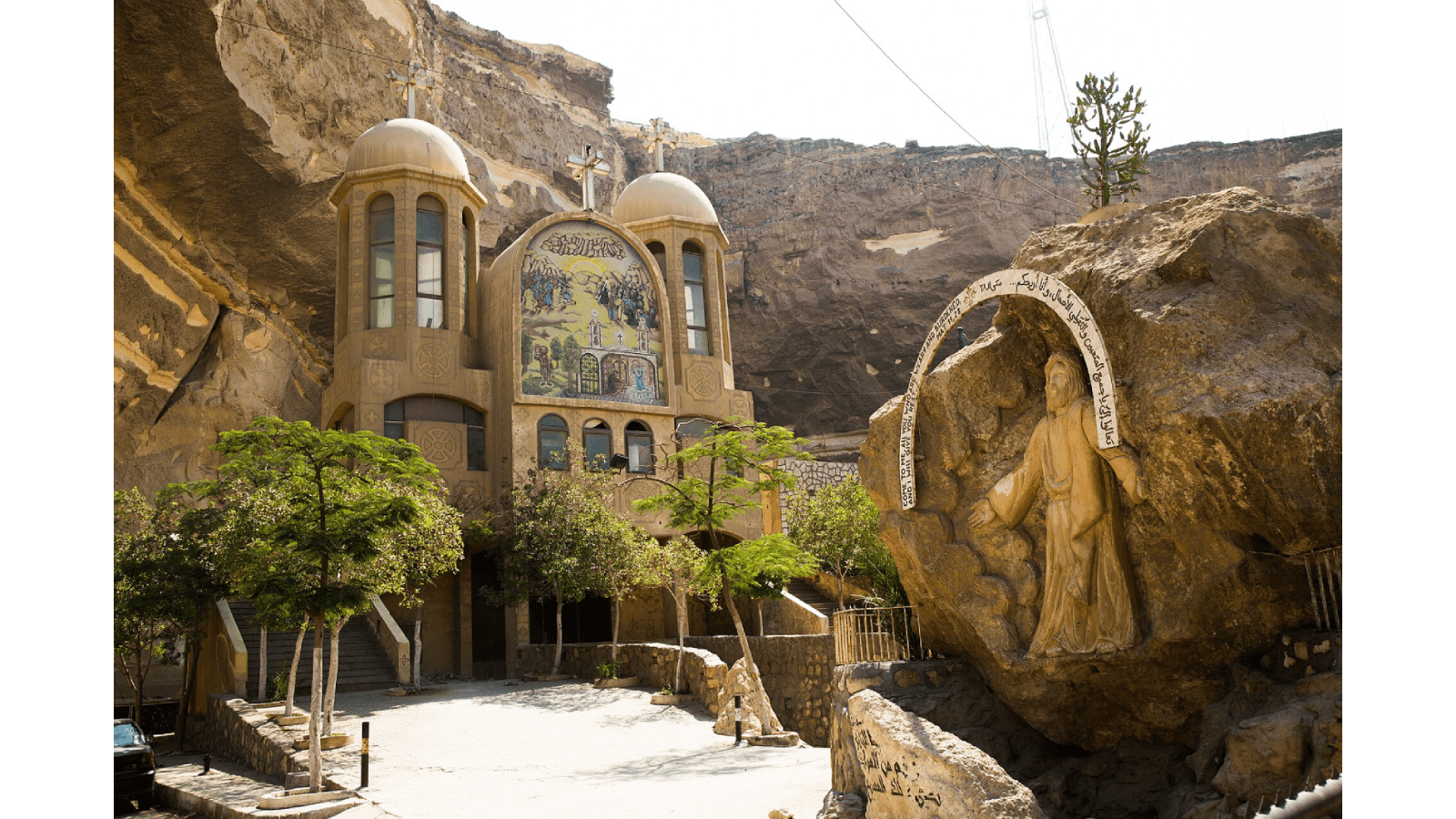
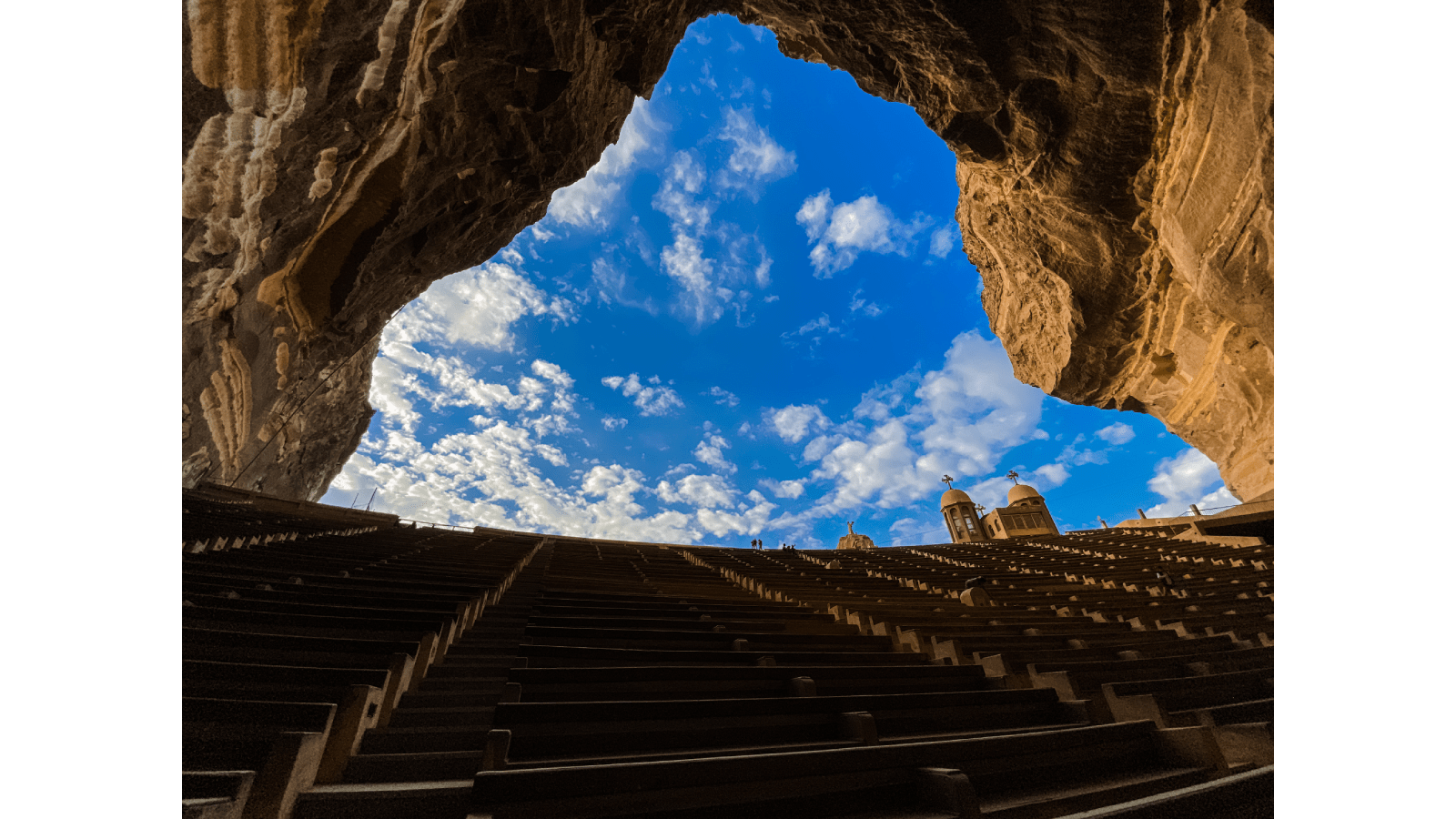
The Monastery of St. Simon the Tanner (also called the Cave Church or St. Samaan Monastery) is one of the most remarkable modern religious complexes in the Middle East. Carved directly into the limestone cliffs of the Mokattam Hills in southeastern Cairo, it stands behind the Zabbaleen settlement known as “Garbage City.” It serves as both a major place of worship for Egypt’s Coptic Orthodox community and a powerful symbol of faith and communal resilience.
The site is named after the 10th-century Coptic saint Simon the Tanner (Samaan el-Kharraz), a humble craftsman associated with the legendary miracle of moving Mokattam Mountain in 979 AD during the Fatimid Caliphate. According to tradition, the mountain was shifted through prayer to affirm the Christian faith before Caliph al-Muizz. The modern monastery was founded more than a millennium later when Cairo’s garbage collectors (the Zabbaleen), predominantly Coptic, were relocated to the Mokattam area in the late 1960s. After an early tin-and-reed church was destroyed by fire, the community began transforming natural caves and the mountainside into a permanent sacred complex starting in the mid-1970s.
Over the following decades the site grew into a series of interconnected cave churches, chapels, and open-air amphitheatres. The largest space can accommodate approximately 20,000 worshippers, making it one of the largest churches in the Middle East. Walls and rock faces are adorned with extensive bas-reliefs and carvings depicting biblical scenes, the life of the saint, and other Christian narratives — work carried out largely by the Polish sculptor Mario over more than twenty years. Relics associated with St. Simon are preserved at the site. The complex continues to function as an active pilgrimage destination and spiritual centre while remaining embedded in the daily life of the surrounding Zabbaleen community.
- Dimensions / Capacity: Complex of seven churches and chapels carved into the cliffs; main amphitheatre/cathedral seats up to ~20,000 people; individual halls and chapels of varying scales (one hall reaches ~17 m in height).
- Style: Rock-cut (cave) architecture integrated with the natural limestone of Mokattam; extensive hand-carved bas-reliefs and sculptures creating an “open Bible” in stone; functional amphitheatre forms adapted to the mountain slope.
- Original / Current Program: Primary place of Coptic Orthodox worship and pilgrimage; multiple dedicated churches and chapels (including the Cathedral of the Virgin Mary and St. Simon); community spiritual and cultural centre serving the Zabbaleen.
- Heritage Status: Significant modern Coptic religious and cultural landmark; widely regarded as an outstanding example of contemporary sacred architecture and community-built heritage in Egypt and the wider Middle East.
- Conservation Status: Active and continuously used; maintained by the monastic community and local supporters; no major structural abandonment reported, though its location within a dense informal settlement presents ongoing urban and environmental pressures.
.
Source:Compiled from historical accounts of the saint and monastery, contemporary descriptions of the site, and reports on the Zabbaleen community and rock-carving programme.