UNESCO World Heritage Site since 1982.
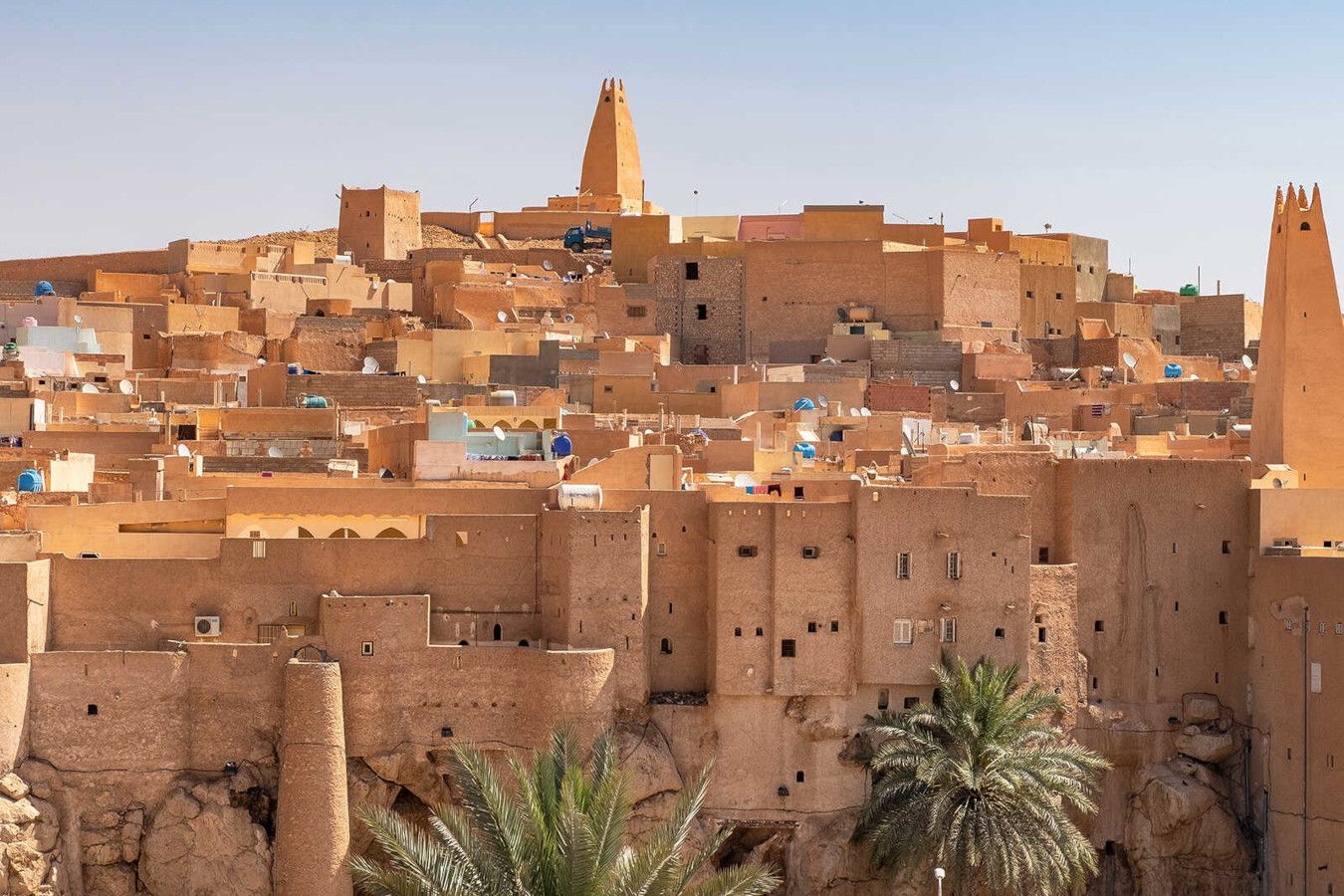
The M’Zab Valley in Algeria is a masterful example of a planned settlement perfectly adapted to the desert environment. Created by the Ibadi Mozabite community between the 11th and 14th centuries, it consists of five fortified towns: El-Atteuf, Bounoura, Melika, Ghardaïa, and Beni-Isguen. Each town was constructed with a clear social and religious vision, reflecting egalitarian principles and Islamic urbanism tailored to arid conditions.
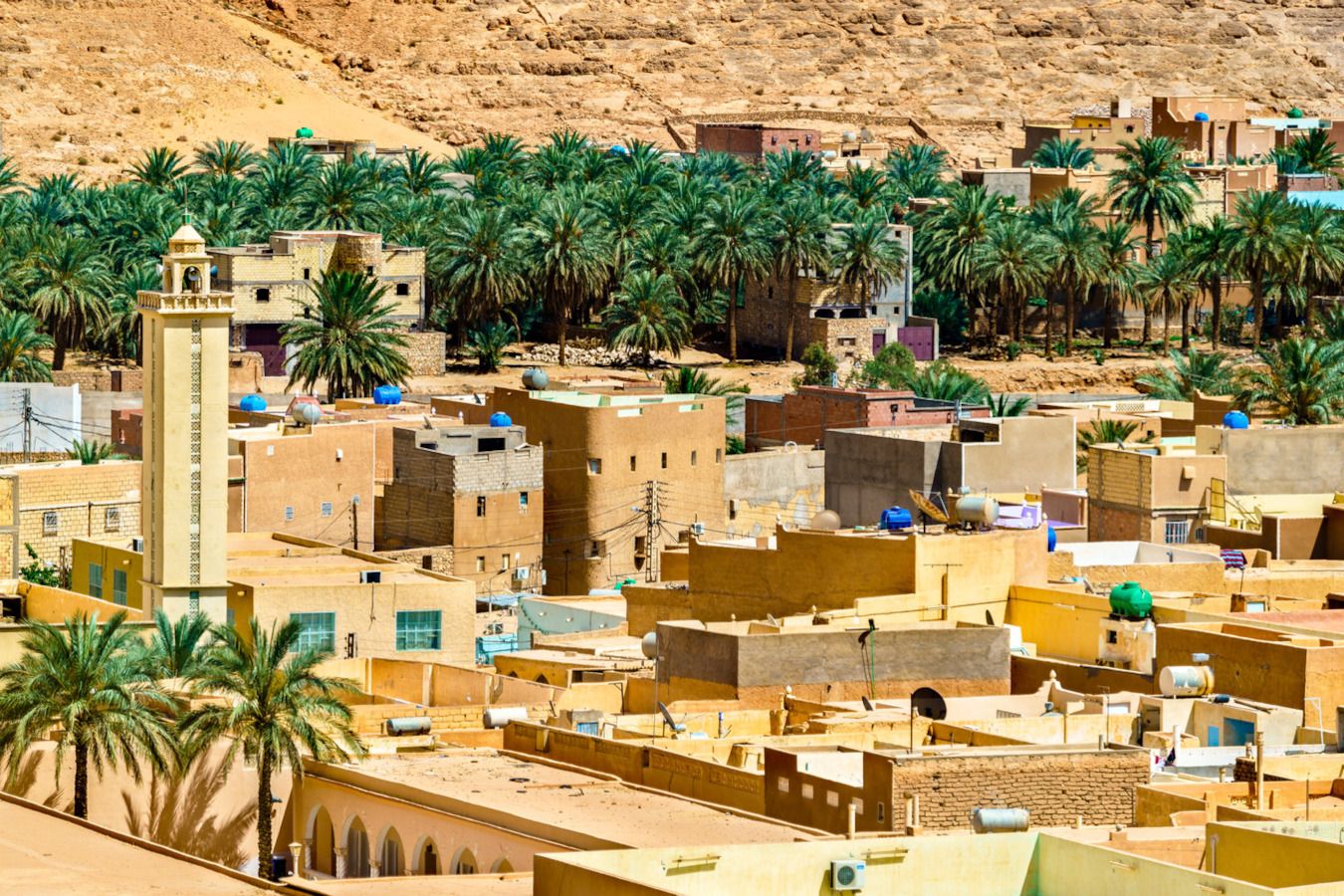
At the heart of each settlement stands a mosque with a towering minaret, which serves both religious and defensive functions. Residences are arranged concentrically around this core, forming compact neighborhoods of cubic houses built with local stone and coated with gypsum-based plaster. Narrow alleys, shaded arcades, and covered walkways define the urban fabric, enabling climate control and social discretion.
The Mozabites developed intricate water management systems to sustain palm groves and agriculture, including ancient foggaras and seasonal dams. Communal facilities like granaries, markets, and baths illustrate the self-sufficient nature of each ksar (fortified village). The architecture demonstrates minimalism and functionality, yet conveys spiritual and communal ideals.
Inscribed as a UNESCO World Heritage Site in 1982, the M’Zab Valley has been recognized for its cultural continuity, ingenious environmental adaptation, and well-preserved traditional urbanism. Conservation efforts have focused on protecting traditional building materials and methods, managing water flow to prevent seasonal flooding, and safeguarding the social identity of the Mozabite community amid increasing external pressures. The valley remains a vibrant, inhabited landscape, where ancient ways of life are maintained in a rapidly modernizing world.
Source: UNESCO World Heritage Centre, African World Heritage Sites, Wikipedia, UNESCO, ArchNet.