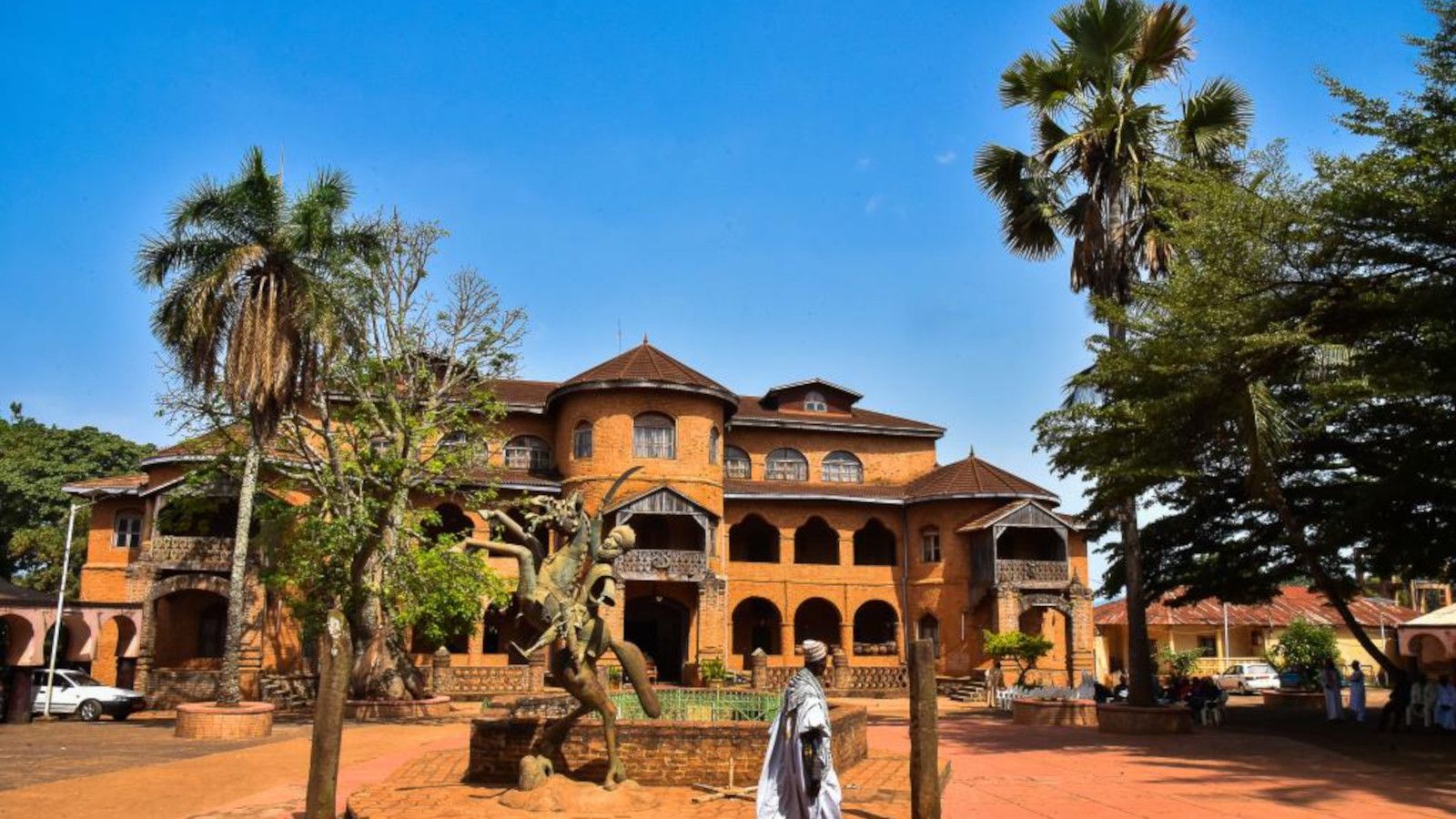
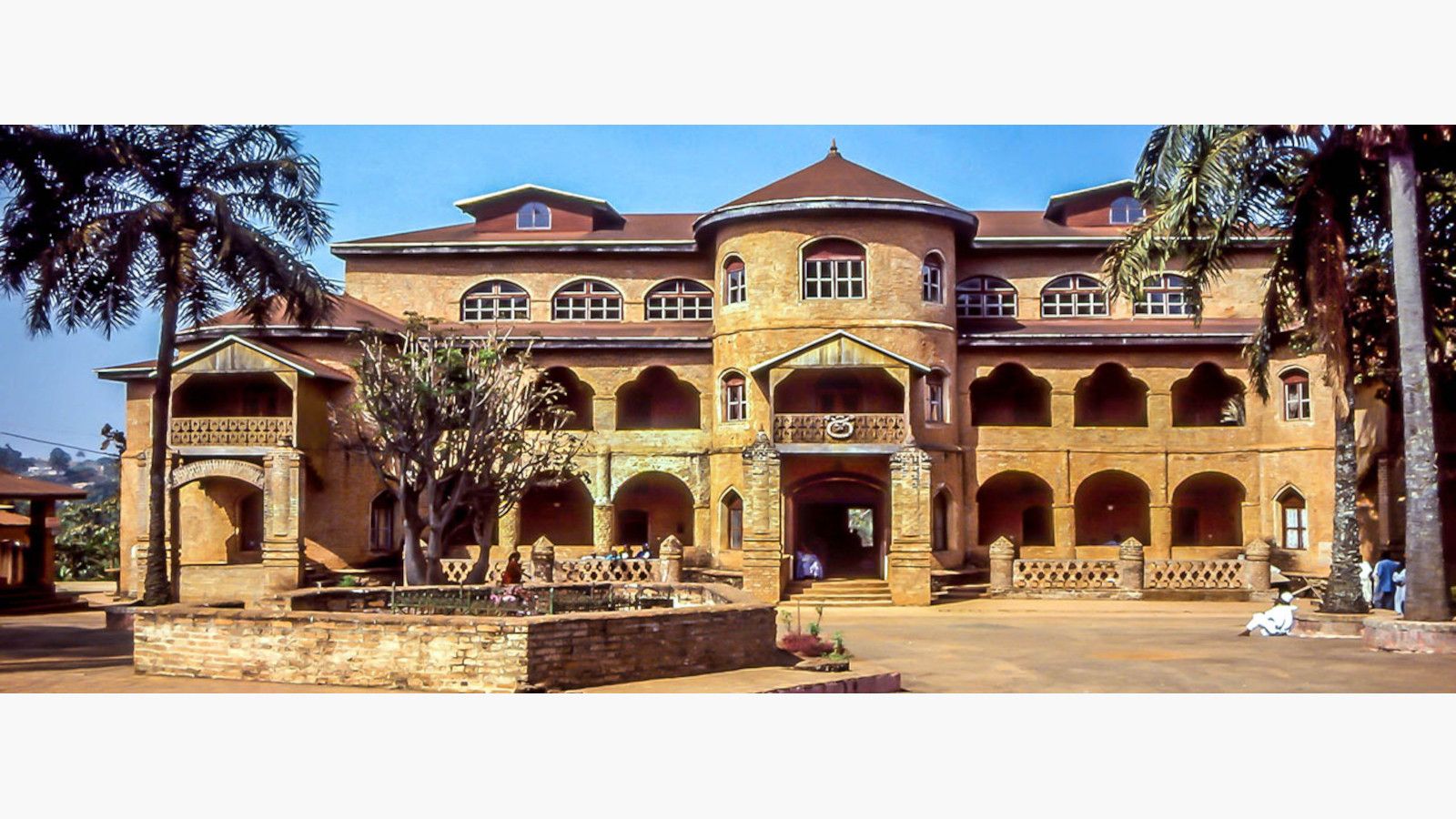
The Royal Palace of Foumban is the heart of the Bamoun Kingdom’s historical and cultural identity. Constructed in 1917 under the patronage of Sultan Ibrahim Njoya, the building replaced an earlier palace destroyed by fire. It uniquely fuses local Bamoun construction traditions—such as laterite brick walls and decorated wooden columns—with European architectural influences introduced during German colonial presence.
The three-towered palace façade, deep verandahs, and vaulted arcades reflect this stylistic synthesis. Internally, the palace integrates ceremonial halls and royal chambers with spaces devoted to preserving historical artifacts and lineage memory. It is the official residence of the Bamoun sultan and serves both as a living political institution and a public museum.
The attached Palace Museum contains over 4,000 items, including royal thrones, spears, drums, textiles, bronze works, and manuscripts written in the Bamum script—a writing system invented by Sultan Njoya himself. This rich material culture narrates over six centuries of royal history, diplomacy, warfare, and spirituality.
In 2013, a modern Museum of the Bamoun Kings was inaugurated beside the palace. Its bold architecture features stylized symbols of the kingdom, including the spider, double-headed snake, and gong, each representing wisdom, vigilance, and authority. The site continues to be the ceremonial and cultural core of the Bamoun people.
The palace and its institutions remain under the stewardship of the royal family and are maintained through local initiatives and national heritage programs. Despite not yet achieving UNESCO recognition, the Royal Palace of Foumban is widely regarded as one of the most important monuments of sub-Saharan Africa’s dynastic legacy.
Source: National Heritage Records of Cameroon, Royal Court of the Bamoun, Cultural Studies on Sultan Ibrahim Njoya