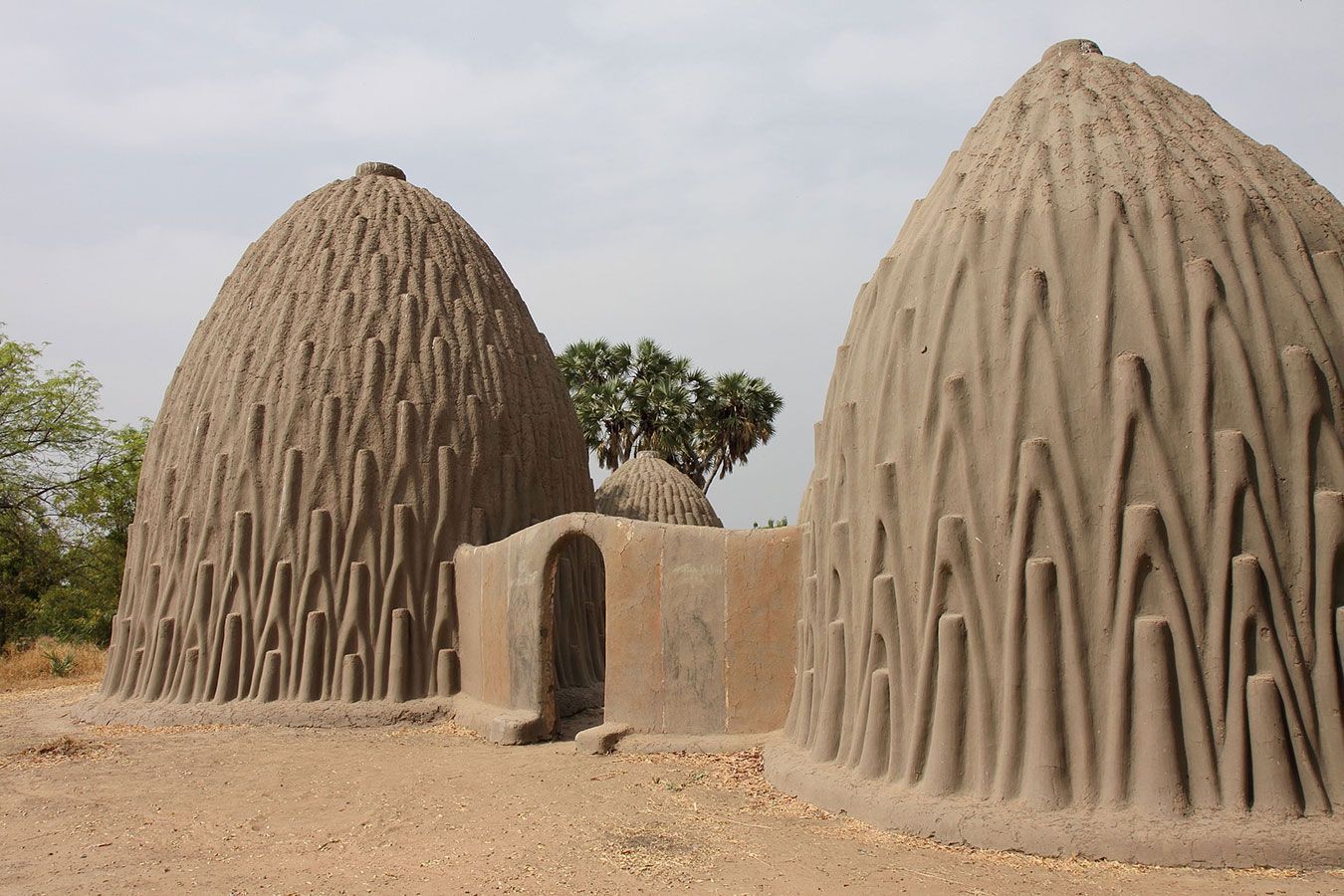

The Musgum mud huts, known locally as Tolek or Case Obus, are traditional beehive‑shaped dwellings crafted from compressed sun-dried mud by the Musgum people in Cameroon’s Mayo-Danay region. Rising up to 9 m high, these domed structures showcase vernacular ingenuity in earth architecture, optimized for climate, community life, and sustainable materials.
Musgum dwellings exemplify an elegant union of form and function: the inverted‑V or conical domes leverage compression architecture (catenary arch) to deliver structural stability with minimal resources. The thick earth walls provide thermal mass, keeping interiors cool during scorching days and warmer at night. Venting through the top opening enhances airflow and also serves as an emergency escape during floods.
Each dome is adorned with vertical grooves and geometric motifs, not only adding a rhythmic aesthetic, but serving practical roles as drainage conduits and climbing supports for annual replastering. Maintenance is traditionally managed by women.
Clusters of Tolek form household compounds, often containing a central granary and delineated spaces for livestock, cooking, and sleeping. This layout reflects communal and extended-family living arrangements, with space accommodating family growth, new marriages, and agricultural needs.
Although considered outmoded with the advent of cement, a reawakening of cultural appreciation is leading to occasional reconstructions—in Cameroon and even exhibited abroad—highlighting their ecological virtues, sculptural forms, and rootedness in Musgum identity.
.
Sources: Wikipedia, PanAfroCentralCore.