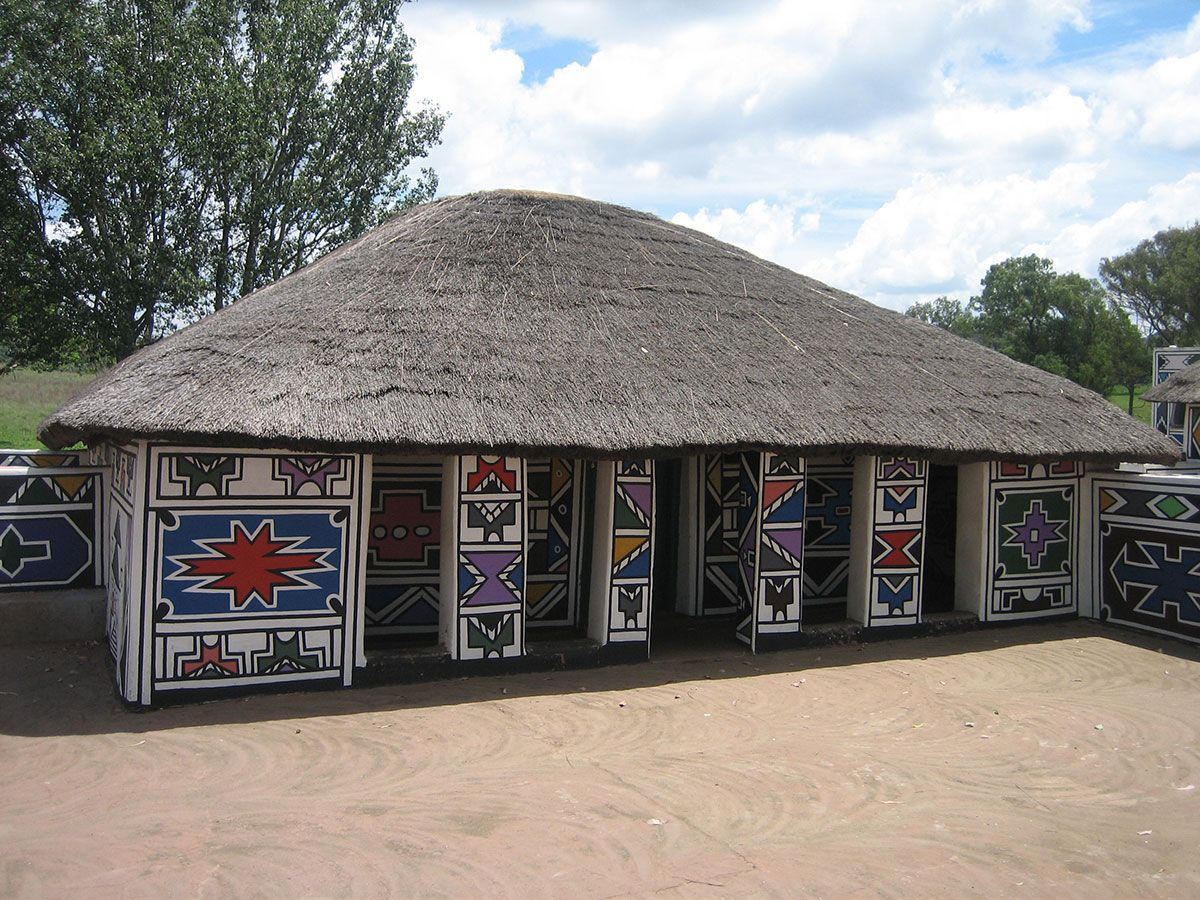
The vibrantly painted homes of the Southern Ndebele people—located primarily in South Africa’s Mpumalanga and Gauteng regions and in northern Zimbabwe—stand as an iconic living art form. Distinct geometric patterns and rich colors decorate their mud-and-thatch roundhouses, symbolizing cultural resistance, identity, and community resilience. This heritage, largely maintained by women’s artistry, dates from the late 19th century and continues today as both tradition and urban cultural expression.
Following the 1880s conflict with Boers, the Ndebele adapted their architecture—traditionally thatch houses and courtyard compounds—to include symbolic murals. Now encoded into vibrant homes, these designs provided emotional expression and discreet communication during oppression.
The process is artistically communal: women, as ritual holders, paint mud walls using feather or twig brushes, first outlining bold shapes with black lines, then filling with color. Motifs—ranging from traditional bead patterns to contemporary references—mark life events, social standing, and family identity.
Houses function both as living spaces and storytelling canvases. Courtyards often feature elaborate murals, while living quarters and gable walls display simpler patterns. Over time, acrylic paints enabled brighter palettes; some designs even incorporate pop‑culture iconography—like a BMW logo—reflecting evolving contexts.
In the late 20th and early 21st centuries, cultural initiatives like the Lesedi Cultural Village have helped preserve these traditions. Artists such as Esther Mahlangu have elevated Ndebele mural art onto world stages through automotive and canvas media, reinforcing global appreciation.
Today, these painted dwellings remain a living architecture—rooted in communal life, heritage expression, and resilience—offering profound insight into gender, art, and socio-cultural continuity within Southern Africa.
.
Sources: Wikipedia, Rethinking The Future, Amusing planet.