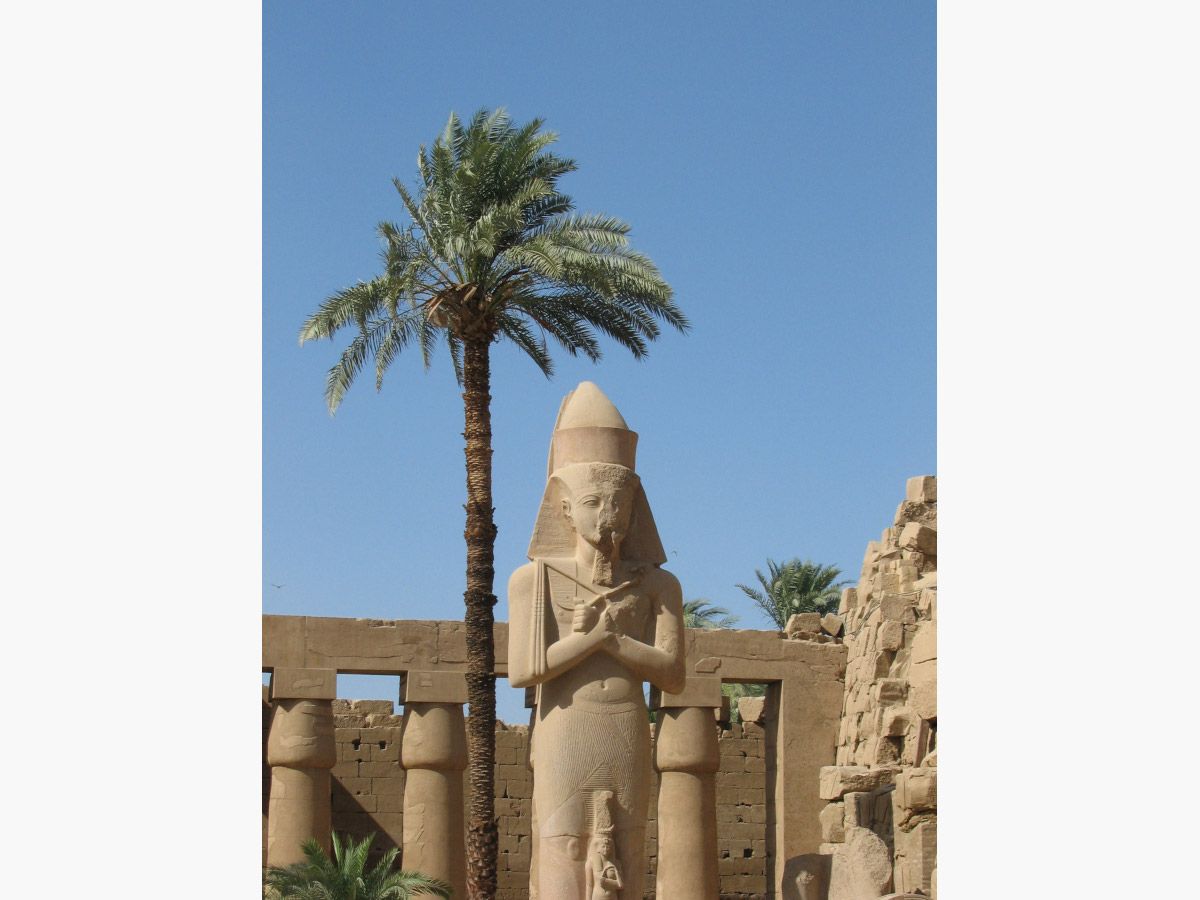
UNESCO World Heritage Site since 1979.
The Karnak and Luxor Temples, two monumental complexes located in modern-day Luxor, epitomize the grandeur of ancient Egyptian religious architecture and urban planning. Both are situated on the east bank of the Nile and were once connected by a 3-kilometer ceremonial avenue lined with sphinx statues, known as the Avenue of the Sphinxes, used during the Opet Festival to transport divine effigies.
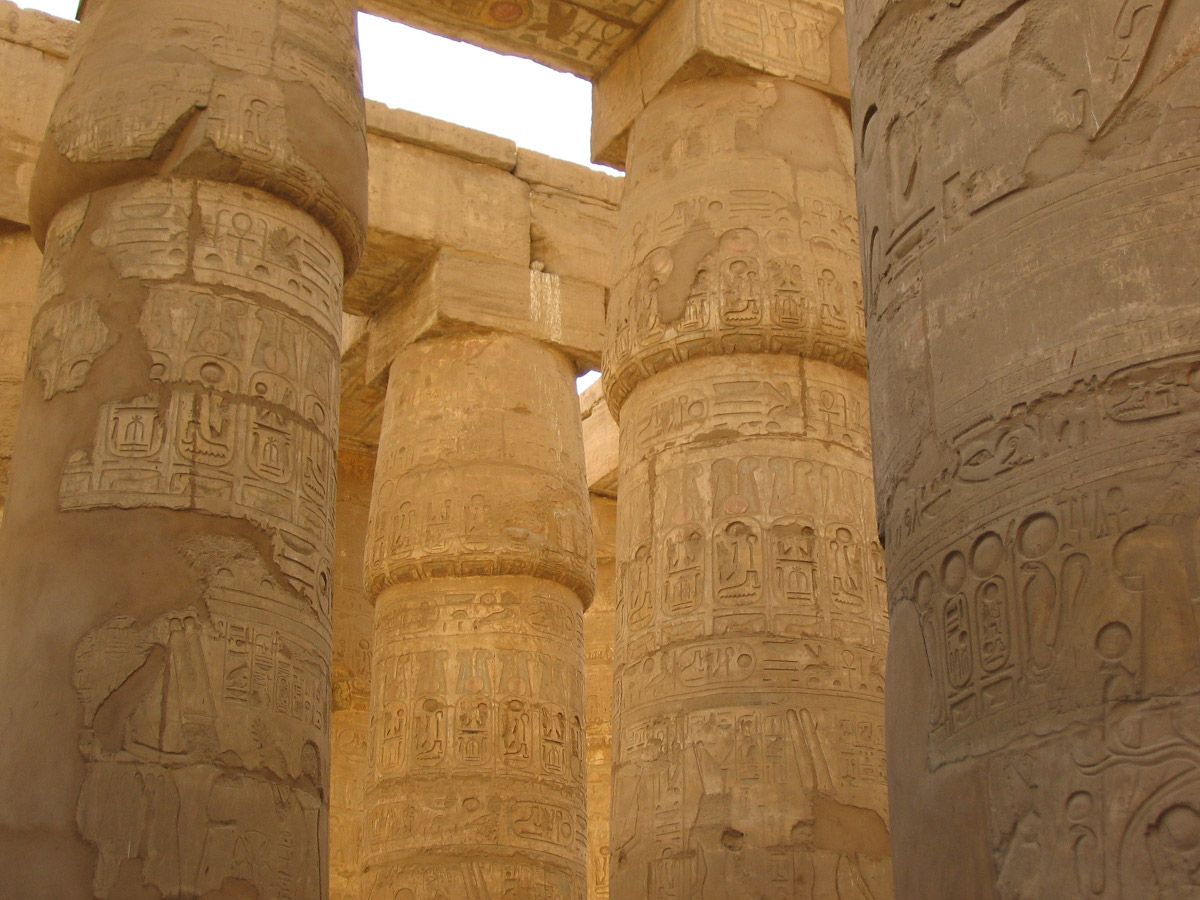
The Karnak Temple complex, sprawling across 200 hectares, was dedicated primarily to the Theban Triad—Amun-Re, Mut, and Khonsu. Its construction began during the Middle Kingdom under Senusret I and continued for over 1,500 years. The Great Hypostyle Hall, constructed under Seti I and Ramesses II, remains its most iconic feature, boasting 134 massive columns up to 24 meters high, richly decorated with hieroglyphic reliefs. The temple’s sandstone structures include pylons, obelisks, shrines, and ceremonial lakes, reflecting the religious and political might of successive pharaohs.
In contrast, the Luxor Temple was conceived as a celebration of kingship rather than a divine dwelling. Built mainly under Amenhotep III and expanded by Ramesses II, it served as a stage for coronation rituals and royal festivals. Unlike Karnak, it features a more linear plan centered around a grand processional axis. It includes a colonnaded courtyard, monumental statues, and remnants of an original pair of obelisks (one now stands in Paris). The temple’s later transformations included a Roman military fortress and the addition of the still-active Abu Haggag Mosque, reflecting layers of sacred occupation across millennia.
Both temples have undergone extensive conservation efforts to counteract damage from groundwater, salt crystallization, and tourism. Their inclusion in the UNESCO World Heritage List underscores their outstanding universal value as testaments to ancient Egyptian civilization and religious thought.
Source: UNESCO World Heritage Centre, Encyclopaedia Britannica, World Monuments Fund, ArchNet, Ministry of Tourism and Antiquities.