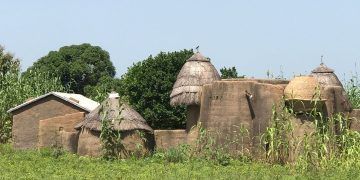
The impluvium houses of the Diola people in Casamance exemplify a sophisticated and climate-resilient form of vernacular architecture. These communal dwellings feature a circular floor plan with outer rooms organized around an open-air central courtyard—called an impluvium—that collects rainwater via a funnel-like thatched roof. This design not only provides potable water but also promotes natural cooling and ventilation, essential in Senegal’s hot, humid climate.
Constructed primarily with sun-dried mud bricks, timber beams, and palm thatch, these buildings represent centuries of refined craftsmanship and environmental adaptation. The thick walls offer insulation, while the enclosed form fosters collective living and cultural rituals. Their defensive circular shape, with minimal external openings, also served to protect inhabitants from external threats in historic times.
Impluvium houses are more than architectural forms—they are social and spiritual centers. The courtyard becomes the heart of domestic life and a setting for ceremonies, storytelling, and seasonal gatherings. Villages such as Enampore, Mlomp, and Seleki still maintain these structures, some of which serve as functional dwellings, others as guesthouses or community venues. In Mlomp, a dedicated cultural museum—housed in an impluvium structure—preserves and interprets Diola heritage.
While recognized on Senegal’s Tentative List for UNESCO World Heritage, their preservation depends primarily on local custodianship. Communities maintain their houses through cyclical rethatching and mud reinforcement, keeping the structures in daily use. These impluvium houses stand as a living tradition, embodying sustainable design, cultural resilience, and a harmonious relationship with nature.
Source: UNESCO Tentative List, Senegalese Cultural Heritage Archives, Museum of Diola Culture, Mlomp.