UNESCO World Heritage Site since 2011.
The Archaeological Sites of the Island of Meroë encompass the city, royal cemeteries, and two additional Kushite centers—Musawwarat es-Sufra and Naqa. It reflects the city’s prominence as the long-standing capital of the Kingdom of Kush (c. 590 BC–350 AD), with a rich architectural legacy blending indigenous, Egyptian, Hellenistic, and Roman influences.
Ongoing conservation efforts supported by UNESCO, national authorities, and international missions now focus on preserving the pyramids and ancillary temples and mitigating flood, conflict, and looting threats.
Meroë, successor to Napatan power, became the Kushite capital around 590 BC. Positioned at the edge of the sandy Butana plain, it thrived on metallurgy—earning reputation as the “Birmingham of Africa”—and served as the dynastic, religious, and economic heart of a regional empire stretching across the Nile valley.
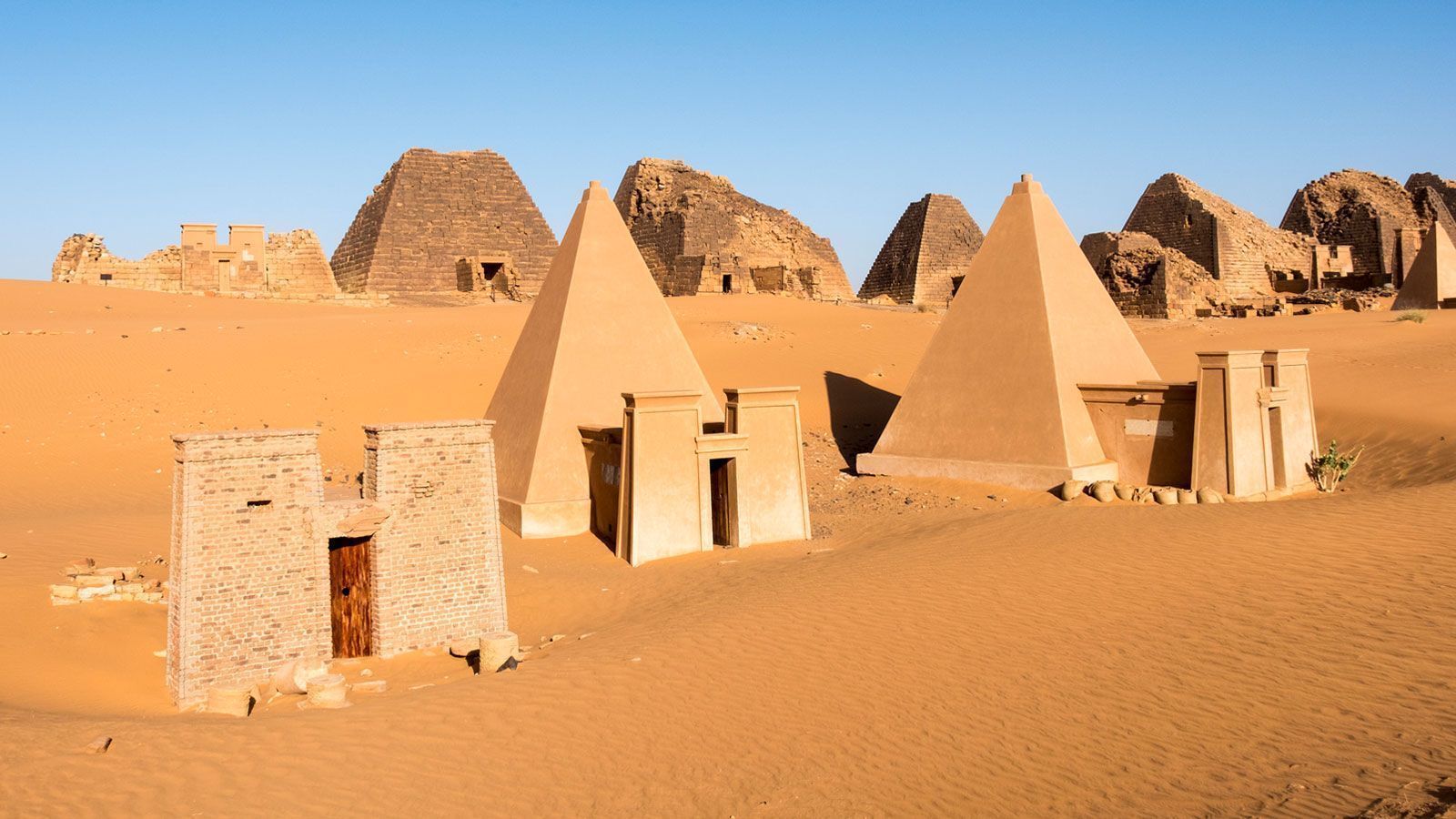
Its necropolises contain more than 200 pyramids, built over centuries:
- The Southern Cemetery marks the city’s early royal burials;
- The Northern Cemetery holds larger royal tombs for up to 40 rulers;
- The Western Cemetery served non-royal elites, revealing shifting burial practices.
These pyramids, though modest in size compared to Egyptian counterparts, are tightly proportioned with inscribed chapels—serving royal tombs and affirming belief in afterlife continuity. Many were dismantled by Italian treasure hunter Ferlini in 1834, though excavations have yielded pottery, jewelry, weapons, glass, and wooden artifacts—reflecting long-distance trade and cultural exchange.
Beyond Meroë, the sites of Musawwarat es‑Sufra and Naqa reveal a dynamic Kushite urbanism—temples, workshops, enclosures, and complex iconography merging Egyptian, Hellenistic, and indigenous forms, including worship of lion‑headed Apedemak and Amun.
The Kingdom’s collapse ca. 350 AD followed Aksumite conquest. Meroë’s ruins stand as testament to indigenous statecraft, craftsmanship, and religious life. Since inscription, international partners and UNESCO have worked to conserve the pyramids, temples, and urban remains, but threats from climatic change, conflict, and illicit looting persist—most recently highlighted by Sudan’s civil war and flash floods.
.
Sources: UNESCO World Heritage Centre, Wikipedia, AfricanWorldHeritageSites, Middle East Monitor, Financial Times.