UNESCO World Heritage Site since 2002.
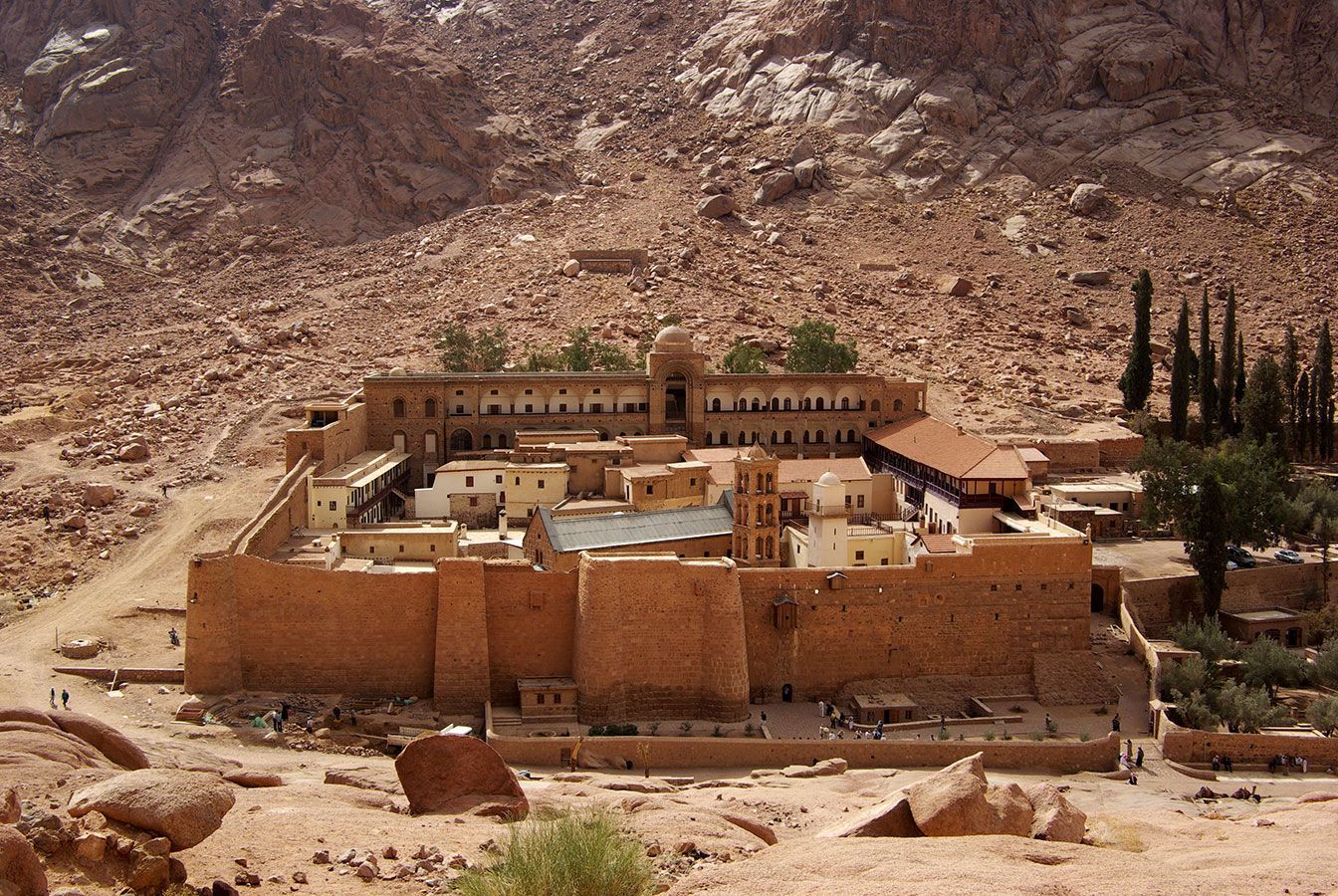
Nestled at the base of Mount Sinai and Horeb, Saint Catherine’s Monastery was founded in the 6th century atop the traditional site of Moses’ Burning Bush. Its fortress walls—commissioned by Byzantine Emperor Justinian I—shield a complex of chapels, including the Church of the Transfiguration of Christ and the sacrosanct Burning Bush chapel.
Over centuries, the monastery expanded, adding chapels, living quarters, and a renowned library that preserves the second-oldest Christian manuscript collection globally, including early Bibles, biblical codices (like Sinaiticus), patristic writings, and liturgical texts in multiple languages. The monastery also retains some of the oldest Byzantine icons—like the Christ Pantocrator and Ladder of Divine Ascent—dating back to the 6th to 12th centuries.
Protected by emperors, caliphs, Crusaders, and modern states, it stands as an enduring spiritual institution. The Ashtiname underscores its interfaith legacy: it has been formally safeguarded by Islamic rulers, including Muhammad. Today, a Greek Orthodox brotherhood of around twenty monks continues daily worship and stewardship of its art and manuscripts.
Declared a UNESCO World Heritage Site in 2002, the monastery remains remarkably intact—its walls, structures, and treasures largely preserved. It hosts pilgrims and scholars, serving as a living link to early Christianity and a focal point for interreligious dialogue. As of June 2025, Egypt and Greece reaffirmed its protected status amid legal challenges relating to monastery land and autonomy.
- State of Conservation: Well-preserved and fortified; ongoing preservation of walls, mosaics, ancient manuscripts, and icons.
- Research & Significance: Home to the second-largest ancient Christian manuscript collection after the Vatican—including Codex Sinaiticus—plus rare Byzantine icons (e.g., Pantocrator) and mosaics from the 6th century onward.
- Interfaith Value: A revered site for Christianity, Judaism, and Islam; the Prophet Muhammad is said to have granted it protection through the Ashtiname of Muhammad.
- Cultural Landscape: Surrounded by rugged Sinai wilderness, connecting monastic life with spiritual pilgrimage to Mount Sinai and Mount Horeb.
.
Sources: Wikipedia, Britannica, UNESCO, Egypt Tours Portal / Inside‑Egypt, Reuters.