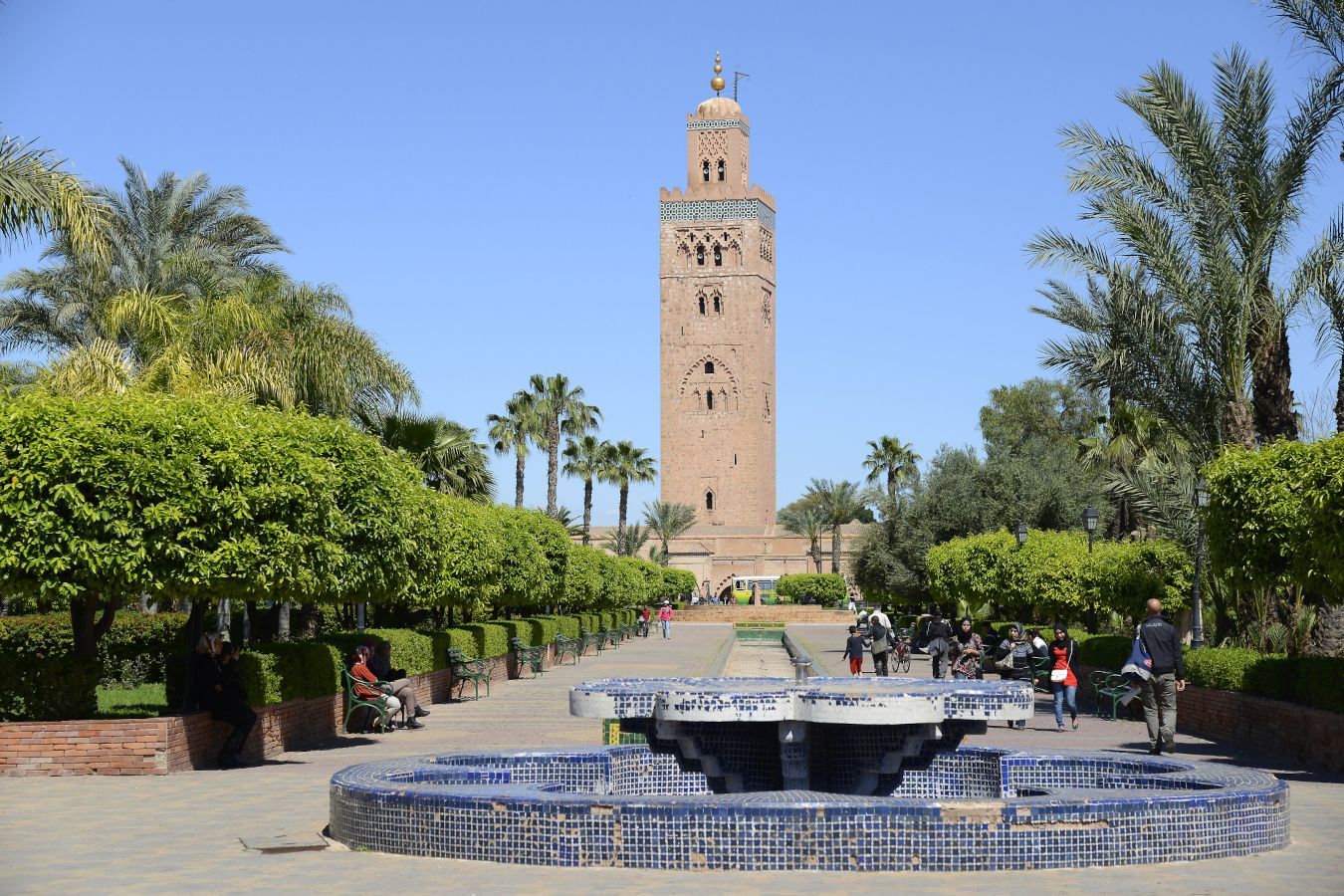
UNESCO World Heritage Site since 1985.
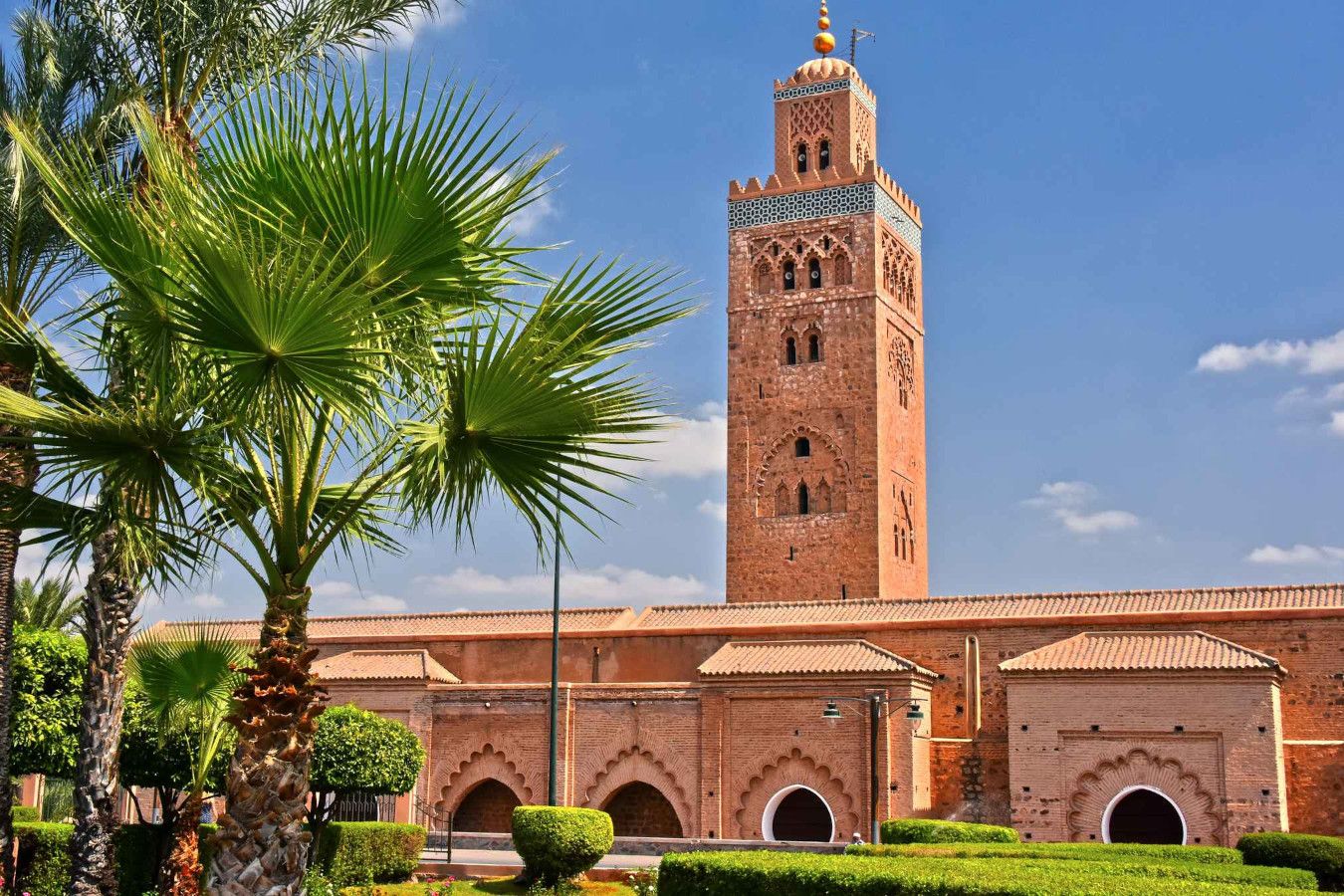
The Koutoubia Mosque is one of the most iconic religious and architectural landmarks in Morocco, and a masterpiece of Almohad architecture. Its name, meaning “Mosque of the Booksellers,” recalls the once-thriving market of manuscript vendors that surrounded it. Built in the second half of the 12th century, the mosque was designed to correct the orientation flaws of an earlier structure, which was subsequently demolished by the Almohads.
The mosque’s layout follows a classic hypostyle plan with a large prayer hall supported by rows of columns and horseshoe arches. This austere yet elegant space opens to a vast courtyard that originally served both ritual and communal purposes. Adjacent to the mosque is the famed Koutoubia minaret, a towering structure standing at 77 meters, making it the tallest historical building in Marrakech. Its square base, decorative blind arches, ceramic tile bands, and triple-copper sphere finial define it as a pinnacle of Almohad architectural expression.
The minaret served as a model for subsequent Islamic towers, notably the Giralda of Seville and the Hassan Tower of Rabat. Crafted from pink sandstone and detailed with fine stonework and minimal ornamentation, the Koutoubia minaret projects authority and refined symmetry. The mosque’s surroundings—open gardens, fountains, and shaded arcades—reinforce its centrality in urban life and cultural memory.
Although access to the interior is limited to Muslim worshippers, the exterior remains a favored site for both residents and visitors. As part of the Medina of Marrakech, the Koutoubia Mosque benefits from national and UNESCO protections that ensure its architectural integrity and visual prominence remain undisturbed amid modern urban development.
Source: UNESCO World Heritage Centre.