UNESCO World Heritage Site since 2011.
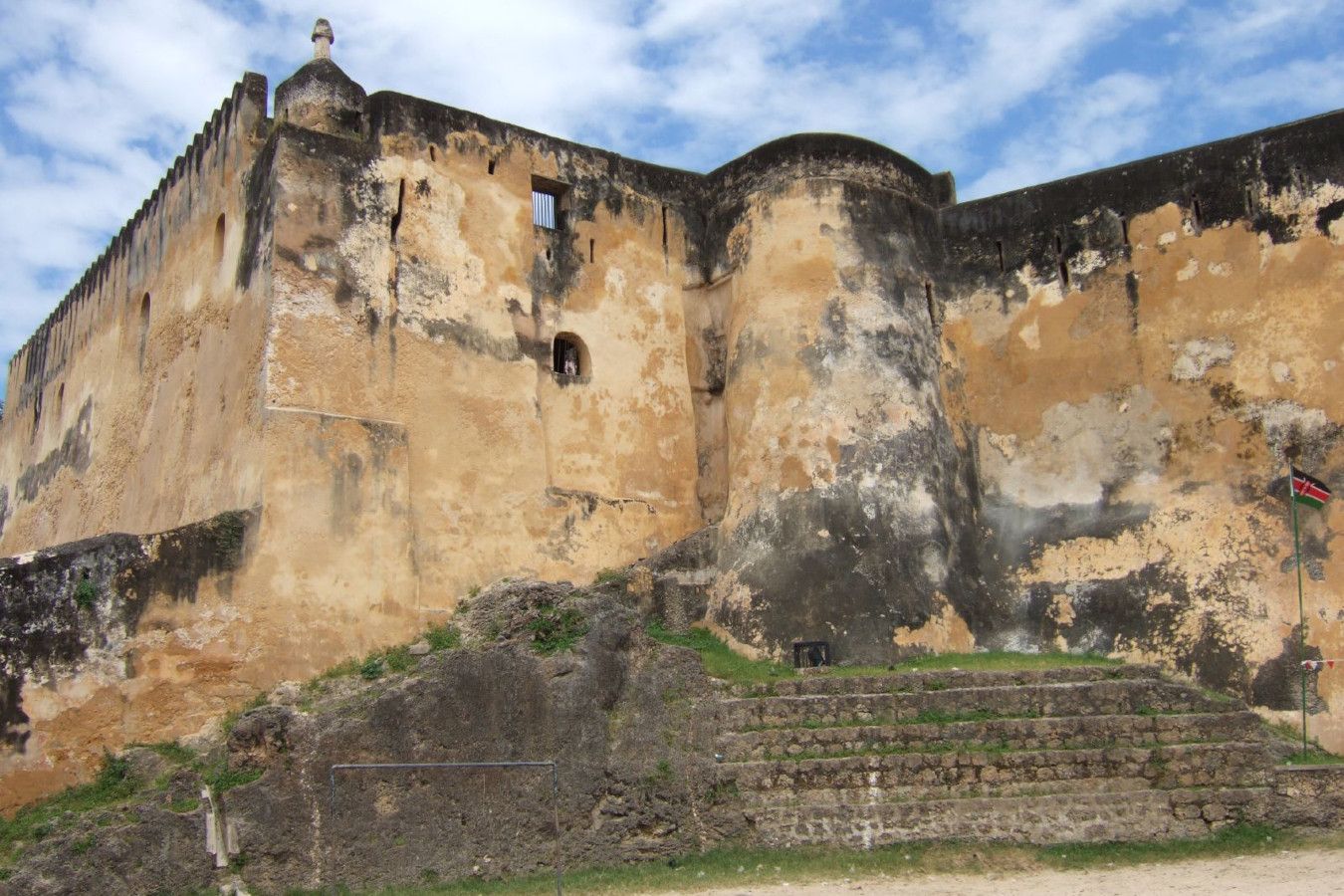
Fort Jesus is one of the finest and best-preserved examples of Renaissance military architecture adapted to African conditions. Constructed by the Portuguese between 1593 and 1596 to guard the strategic harbor of Mombasa, the fort was designed by Giovanni Battista Cairati, who brought to the East African coast the geometric design principles of Renaissance fortifications. The structure, with its angular bastions and thick walls, was intended to withstand artillery assaults and maritime threats.
Made from locally sourced coral stone and bonded with lime mortar, Fort Jesus exhibits both European engineering and local craftsmanship. The structure’s five bastions, a surrounding moat, and reinforced walls reflect a hybridized architectural legacy. The fort’s aerial plan is said to resemble the figure of a man lying on his back, consistent with Renaissance ideals of human proportion.
Over the centuries, the fort changed hands several times, enduring long sieges, including a prolonged siege by Omani forces from 1696 to 1698. The Omanis modified the interior to suit their military and administrative needs, including the addition of prayer rooms and storage facilities. During British colonial rule, the fort was repurposed as a prison and administrative center.
Fort Jesus was declared a national monument in 1958 and later restored to serve as a museum. It now houses historical collections related to Portuguese, Swahili, and Omani cultures, including pottery, weapons, ship models, and inscriptions. Ongoing conservation efforts focus on safeguarding the coral stone fabric and managing the surrounding heritage zone of Mombasa Old Town.
Today, Fort Jesus is a vibrant symbol of the Indian Ocean’s layered history of trade, conflict, and cultural exchange. It remains one of Kenya’s most visited historic sites, offering insight into over four centuries of coastal interaction and resilience.
Source: UNESCO World Heritage Centre, National Museums of Kenya.